
Windows have a powerful influence on how a room looks, feels, and functions. Their size, placement, and natural light affect everything from privacy to indoor comfort. While many window coverings can provide basic light control, custom curtains and drapery bring an added level of softness, dimension, and refinement to a home.
For homeowners interested in luxury window curtains and drapery in Pewaukee, customization makes it possible to create treatments suited to each window rather than settling for standard lengths, limited fabrics, or an imprecise fit. Every element—including material, lining, fullness, pleat style, hardware, and installation height—can be selected with the room and window in mind.
Window Designs by Landy Brown provides custom window treatment guidance for homeowners in Pewaukee, Oconomowoc, and surrounding Wisconsin communities. From elegant stationary panels to functional drapery with motorized operation, each treatment can be designed to provide the appropriate balance of privacy, light control, insulation, and visual impact.
Why Choose Custom Curtains and Drapery?
Ready-made curtain panels can provide a quick window covering, but they are manufactured in predetermined widths and lengths. That can create problems when windows are unusually tall, wide, narrow, or arranged in a group. Standard panels may hang above the floor, bunch excessively, fail to close across the entire window, or look undersized next to the surrounding architecture.
Custom drapery is made according to the dimensions of the individual window and the intended design. The fabric is calculated to provide the right degree of fullness, and the finished length is selected based on how the panels should meet the floor. Hardware placement is planned as part of the overall treatment rather than treated as an afterthought.
Homeowners choosing luxury window curtains and drapery in Pewaukee also have access to a much broader range of fabrics, linings, pleat styles, trims, and operating systems. That flexibility helps the finished treatment feel connected to the home rather than added as a generic covering.
Customization is equally important for performance. A bedroom may need substantial room-darkening coverage, while a living room may benefit from soft light diffusion. A west-facing window might require additional protection from afternoon sunlight, whereas a shaded window may need only moderate privacy.
The Difference Between Curtains and Drapery
The terms “curtains” and “drapery” are sometimes used interchangeably, but they can describe somewhat different treatments.
Curtains are typically fabric panels that may be lined or unlined. They can range from casual café-length treatments to full-length decorative panels. The term covers many fabric window coverings, including both custom and ready-made options.
Drapery generally refers to more structured fabric panels. Custom draperies are often lined, carefully pleated, and installed on specialized hardware. They may be stationary, meaning they frame the window without closing, or functional, meaning they can open and close to control light and privacy.
The right terminology matters less than the final design. When planning luxury window curtains and drapery in Pewaukee, homeowners should focus on how they want the treatment to look, whether it must move across the window, and what level of privacy or light control the room requires.
A professional consultation can translate those goals into practical specifications, including fabric quantity, panel width, lining, header construction, and hardware.
How Custom Drapery Changes the Appearance of a Room
Fabric introduces softness and movement around the straight lines of a window. It can make a large room feel more comfortable, bring visual height to a space, or create a graceful transition between the window and surrounding wall.
Installing drapery hardware above the window frame can make the window appear taller. Extending the rod or track beyond the sides of the opening gives the panels space to stack without covering as much glass. This can preserve more of the outdoor view when the drapery is open.
The scale of the treatment also affects how the room feels. Narrow panels may look insufficient beside a large window, while properly calculated fullness creates a richer and more substantial appearance. In rooms with high ceilings, custom lengths prevent the awkward gaps that often occur with ready-made panels.
Pattern and color can be used in different ways. Drapery may create a quiet background with a subtle texture, introduce a controlled pattern, or serve as the most visually prominent window treatment in the room. Because the treatment is custom, the design can be adjusted to match the window’s scale rather than relying on a fabric repeat or panel size selected for mass production.
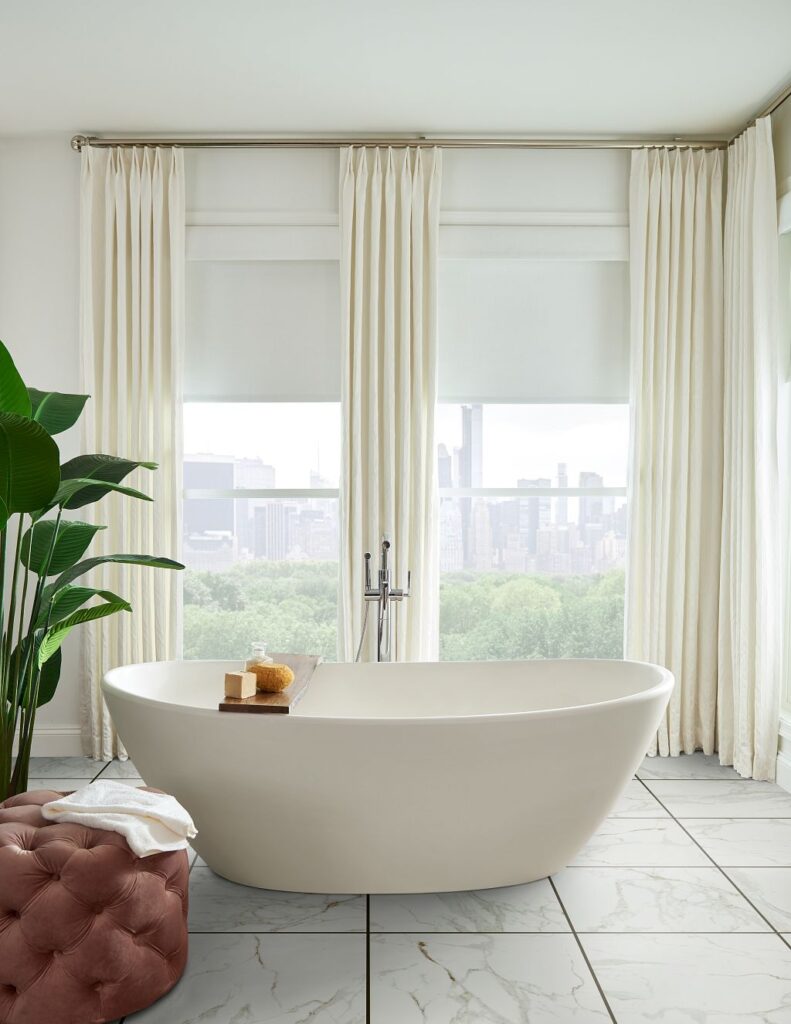
Selecting the Right Fabric
Fabric is the foundation of custom curtains and drapery. Its fiber content, weave, weight, texture, pattern, and color all affect how the finished treatment hangs.
Lightweight fabrics tend to create an airy, relaxed effect. They may gently filter daylight, but they usually require lining when privacy or greater light control is important. Medium-weight fabrics offer versatility and can work with many pleat styles. Heavier materials create a more substantial treatment, although the hardware and installation surface must be able to support their weight.
When selecting luxury window curtains and drapery in Pewaukee, homeowners should evaluate fabric samples in the room where they will be installed. Natural light can significantly change a material’s appearance. A neutral that looks warm under showroom lighting may appear cooler beside a north-facing window. Rich colors may become brighter in direct sunlight, while subtle textures can be more noticeable when light moves across them.
The material also needs to suit the treatment’s function. Drapery that will open and close every day should move smoothly and maintain its shape. Stationary panels allow more freedom because they do not need to travel across a rod or track.
Solid Fabrics
Solid fabrics can provide color and texture without introducing a visible pattern. Their versatility makes them suitable for many homes, from understated contemporary spaces to more traditional rooms.
A solid material does not have to look plain. Slubbed weaves, subtle variations, and dimensional textures can add visual interest that becomes more noticeable as the light changes.
Patterned Fabrics
Patterns can give custom drapery a distinctive character. Depending on its scale, a pattern may appear bold and dramatic or soft and restrained.
Custom fabrication allows the pattern to be matched across seams and coordinated between panels. This attention to placement is particularly important for large windows and adjoining treatments. Poorly matched patterns can make otherwise attractive drapery look uneven.
Sheer Fabrics
Sheer curtains soften daylight and reduce the stark appearance of an uncovered window. They can provide limited daytime privacy, but visibility may increase at night when interior lights are on.
Sheers are often paired with a more substantial window covering when homeowners need flexible privacy. They may be installed on a separate track so each layer can operate independently.
Understanding Drapery Linings
The lining attached behind the face fabric can be nearly as important as the fabric itself. It affects privacy, light control, insulation, fullness, and the way the treatment hangs.
Standard Lining
Standard lining gives drapery more body and provides a uniform appearance from outside the home. It can reduce the amount of sunlight reaching the decorative fabric and offer moderate privacy.
This lining is appropriate for many living rooms, dining areas, and other spaces where homeowners want some light reduction without substantially darkening the room.
Privacy Lining
Privacy lining helps reduce visibility through the fabric. It may be selected for street-facing rooms, first-floor windows, and other areas where coverage is important after dark.
The amount of light that passes through will depend on both the decorative fabric and the lining. Samples should be considered together rather than evaluated independently.
Room-Darkening Lining
Room-darkening lining provides stronger light control and is frequently used in bedrooms, nurseries, television rooms, and spaces affected by outdoor lighting.
Although this lining blocks a significant amount of light through the fabric, small gaps may remain around the top, bottom, or sides of the treatment. Professional planning can reduce these gaps by extending the drapery beyond the window opening and selecting suitable hardware.
Interlining
Interlining is an additional layer positioned between the decorative material and the back lining. It creates a fuller, more substantial treatment and can improve insulation. It may also help lightweight fabrics develop a richer drape.
Because interlining adds weight and bulk, it must be considered when choosing hardware and determining how the panels will stack. It is one of several customization options available for luxury window curtains and drapery in Pewaukee when homeowners want extra body and coverage.
Drapery Pleat Styles
Pleats determine how the fabric is shaped at the top of the treatment. They influence fullness, formality, stacking, and compatibility with the selected hardware.
Pinch Pleats
Pinch pleats create evenly spaced folds gathered into groups near the top. This classic construction works in traditional and transitional homes and can be adapted to different levels of fullness.
The treatment typically hangs from hooks attached to rings or a traversing system. Because the pleats are permanently formed, the panels maintain an orderly appearance when open or closed.
Euro Pleats
Euro pleats are gathered at the top while opening into a softer fold below. They provide a tailored look with a slightly more relaxed feeling than traditional pinch pleats.
This style works well when homeowners want structured drapery without an overly formal appearance.
Goblet Pleats
Goblet pleats form rounded shapes at the top of the panel. They create a dramatic, highly tailored appearance and are typically best for stationary treatments because repeated movement can distort the formed pleats.
Ripple-Fold Drapery
Ripple-fold treatments create smooth, consistent waves across the width of the drapery. They operate on a specialized track and provide a clean appearance that is especially well suited to large windows and contemporary homes.
Ripple-fold drapery requires precise calculations to maintain uniform spacing. The track, carriers, fabric fullness, and finished dimensions all need to work together.
Grommet and Rod-Pocket Styles
Grommet panels slide directly onto a rod through rings inserted into the fabric. Rod-pocket panels use a sewn channel. Although these styles can be appropriate for certain designs, they typically operate differently from pleated drapery on rings or a track.
Rod pockets are often best for stationary applications because the gathered fabric can be difficult to move regularly. Homeowners seeking smooth daily operation may prefer a traversing system.
Stationary Panels Versus Functional Drapery
Stationary panels remain at the sides of the window. They add fabric, color, and vertical emphasis but are not intended to close across the glass. They can be combined with blinds, shades, or shutters that provide the primary light control and privacy.
Because stationary panels do not need to span the entire window, they often require less fabric than functional drapery. However, they should still have enough fullness to look intentional. Panels that are too narrow may appear flat or undersized.
Functional drapery opens and closes across the window. It can provide flexible privacy, reduce glare, and soften incoming sunlight. The design must account for the full width of the opening, appropriate overlaps, panel returns, and stacking space.
When planning luxury window curtains and drapery in Pewaukee, homeowners should decide whether the fabric will be decorative, functional, or both. That decision affects nearly every part of the project, from yardage and lining to hardware and installation.
Drapery Length and Its Effect on the Design
The way drapery meets the floor contributes to the finished appearance. Custom fabrication allows the length to be selected precisely for the room and fabric.
Floating Above the Floor
Panels can stop slightly above the floor to prevent dragging. This is a practical choice for functional drapery that will open and close frequently.
The gap should appear intentional and consistent. If the panels are too short, they may resemble an improperly sized ready-made treatment.
Breaking at the Floor
Drapery can extend just enough to create a slight bend where it meets the floor. This produces a softer look while limiting excess fabric.
Puddling on the Floor
Longer panels may pool onto the floor for a dramatic appearance. This approach is best suited to stationary treatments in areas where the fabric will not be disturbed.
Puddled drapery requires more maintenance and may not be practical in households with active children or pets. The appropriateness of the treatment should be considered along with appearance.
Exact Floor Length
Panels can be made to meet the floor with minimal excess material. Precise measuring is especially important because floors and ceilings are not always perfectly level. Multiple measurements may be needed across a wide window.

Custom Hardware Completes the Treatment
Drapery hardware supports the fabric and contributes to its appearance and operation. Decorative rods, rings, finials, brackets, and traversing tracks are available in different sizes, finishes, and styles.
The hardware must be strong enough for the treatment. Wide windows, lined panels, and substantial fabrics can place considerable weight on the rod or track. Proper brackets and secure installation are essential.
Decorative rods remain visible and can become part of the treatment’s design. Traversing tracks place greater emphasis on function and can provide smooth operation across larger spans. Some systems conceal the track behind the fabric or within a streamlined profile.
Hardware projection determines how far the treatment sits from the wall. This matters when drapery is layered over a shade, blind, or shutter. Adequate clearance allows each treatment to function without rubbing against the other.
Thoughtfully selected hardware helps luxury window curtains and drapery in Pewaukee look complete while supporting dependable operation.
Motorized Drapery for Large or Hard-to-Reach Windows
Motorization can make functional drapery easier to operate. Instead of pulling the fabric by hand, homeowners can open or close the treatment using a compatible remote, wall control, app, or automation system.
This option is particularly useful for wide windows, tall installations, and treatments positioned behind furniture. It can also help protect the fabric because users do not need to repeatedly handle the leading edge of each panel.
Depending on the selected system, motorized drapery may be scheduled to open in the morning, close after sunset, or respond to household routines. Automated closing can improve evening privacy, while scheduled adjustments can help reduce strong sunlight at certain times of day.
Motorization must be planned early in the project. The track, motor placement, power source, panel construction, and controls all need to be compatible. Window Designs by Landy Brown offers motorized coverings and can help homeowners determine whether automated drapery is suitable for a particular window.
Layering Drapery With Shades, Blinds, or Shutters
Drapery does not have to serve every window treatment function by itself. Layering it with another treatment can provide greater control over light, privacy, and appearance.
A shade can manage everyday privacy while stationary drapery panels soften the sides of the window. Blinds can offer adjustable light control beneath decorative fabric panels. Shutters can provide durable louvered coverage while drapery introduces softness.
Layered treatments must be carefully measured. The drapery rod or track needs enough projection to clear the inner treatment. The panels should also have adequate stacking space so they do not obstruct the view or interfere with shade and blind operation.
For homeowners selecting luxury window curtains and drapery in Pewaukee, layering creates an opportunity to combine the practical strengths of different products. The result can provide more versatility than either treatment would offer alone.
Curtains and Drapery for Living Rooms
Living rooms often contain some of the home’s largest and most visible windows. The treatments must suit the scale of the room while managing daylight, glare, and evening privacy.
Stationary panels can frame a window without blocking much of the glass. Functional drapery can close when privacy is needed or when strong sunlight affects seating and television viewing.
A lined fabric may help protect the decorative material and create a more substantial appearance. If the windows extend across a wide wall, a traversing or motorized system may make operation easier.
Fabric selection should also consider how the room is used. A formal sitting room may suit structured pleats and substantial materials, while a frequently used family space may benefit from durable fabric and straightforward operation.
Drapery for Bedrooms
Bedroom window treatments must balance appearance with privacy and light control. Room-darkening lining can reduce morning sunlight and limit the effect of streetlights at night.
For stronger coverage, drapery can extend beyond the sides of the window and above the opening. The overlap helps reduce the light that would otherwise enter around the perimeter. A center overlap is important where two functional panels meet.
Motorized operation may be useful for large bedroom windows. Scheduled controls can close the drapery in the evening and open it at a preferred time in the morning.
When choosing luxury window curtains and drapery in Pewaukee for a bedroom, homeowners should consider how much darkness they need, which direction the window faces, and how close neighboring homes are.
Drapery for Dining Areas
Drapery can bring softness and vertical emphasis to dining spaces. Because these rooms are often used in the evening, privacy after dark may be a significant concern.
Functional panels can close across the window when needed, while lined stationary panels can frame a separate shade or blind. The fabric may coordinate with adjoining rooms without matching them exactly.
Dining areas sometimes have patio doors or wide groups of windows. These openings require careful planning so the treatment does not interfere with access. A one-way draw, split draw, or motorized track may be appropriate depending on the location and direction of traffic.
Drapery for Patio Doors and Wide Openings
Patio doors and broad expanses of glass present different challenges from standard windows. The treatment must cover a large area while allowing convenient access through the door.
A traversing system helps the fabric move smoothly along the full width. One-way-draw drapery can stack on the side opposite the most frequently used door panel. Split-draw treatments open from the center and stack on both sides.
Adequate stacking space is essential. If there is insufficient wall area beside the glass, the open fabric may continue to cover part of the view. A professional can calculate the likely stack width based on the fabric, fullness, pleat style, and total span.
Motorization can be especially helpful across a wide opening because it moves the panels consistently without tugging or uneven handling.
Improving Comfort During Wisconsin Winters
Wisconsin winters can make areas near uncovered windows feel noticeably colder. Glass is often one of the coldest surfaces in a room, and poorly covered windows can contribute to drafts and heat loss.
Lined drapery creates a fabric layer between the room and the glass. Interlining can add further body and insulation. For improved coverage, the panels should extend beyond the window opening and close with an appropriate overlap.
Drapery cannot repair leaking or damaged windows, but it can help reduce the sensation of cold near the glass. Closing panels after sunset may help retain indoor warmth, while opening them during sunny winter periods can allow beneficial solar heat to enter.
The construction of luxury window curtains and drapery in Pewaukee can be adapted to local seasonal conditions through thoughtful fabric, lining, and installation choices.
Managing Summer Sunlight and Heat
Strong sunlight can create glare and increase indoor temperatures during summer. West-facing windows are often especially challenging because they receive direct sunlight during the warmer afternoon hours.
Functional drapery can close before the sunlight becomes intense. A suitable lining helps protect the decorative fabric and reduces the amount of visible light entering the room.
Light-colored backings can provide a uniform exterior appearance and may reflect more light toward the glass than a dark backing. Room-darkening materials provide greater coverage for rooms that need stronger sun control.
Motorized or scheduled operation makes it easier to close treatments before peak sun exposure, even when homeowners are not actively adjusting every window.
Privacy Considerations for Pewaukee Homes
Privacy needs vary based on the home’s location, window orientation, and distance from neighboring properties. A window overlooking a secluded yard may need different coverage from one facing the street or an adjacent home.
Unlined fabric may become transparent when indoor lights are on. Homeowners should examine the face fabric and lining together to understand how the completed treatment will perform after dark.
Sheer curtains offer filtered daylight but generally do not provide complete nighttime privacy. They can be paired with functional lined drapery, blinds, shades, or shutters when adjustable coverage is needed.
Custom treatments make it possible to select a different solution for each room while maintaining a coordinated appearance throughout the home.
Professional Measurement and Installation
The quality of custom drapery depends heavily on accurate measurements. Finished length, rod height, panel width, stack space, returns, and overlaps must all be calculated before fabrication begins.
Professional measurement also identifies uneven ceilings, floors, or window frames. These variations may not be obvious until long panels are installed. Measuring at multiple points helps the finished treatment appear balanced.
Hardware installation requires appropriate anchors and secure placement. Heavy lined drapery cannot depend on inadequate fasteners or unsupported sections of wall. The brackets must be positioned to distribute weight and keep the rod or track level.
With luxury window curtains and drapery in Pewaukee, professional installation helps protect the investment and ensures that the panels hang and operate as intended.
Caring for Custom Drapery
Routine care can help custom curtains and drapery retain their shape and appearance. A vacuum with a soft upholstery attachment may be used at low suction to remove dust. Special attention should be given to the tops of pleats and the areas where fabric rests against the floor.
Homeowners should follow the care instructions for the specific material. Some fabrics may be damaged by water, steam, spot-cleaning products, or conventional laundering. Removing custom panels without understanding the hardware can also affect pleats and hooks.
Direct handling should be minimized, especially with delicate or light-colored fabrics. Drapery wands and motorized systems allow the treatment to move without repeated contact with the face fabric.
If professional cleaning becomes necessary, the provider should have experience with custom window treatments and understand the materials used in the face fabric, lining, and trim.
Creating a Coordinated Whole-Home Plan
Not every room needs identical drapery. A successful whole-home plan can use related colors, textures, hardware finishes, or pleat styles while allowing each treatment to respond to the room’s function.
Bedrooms may require room-darkening lining. Living areas might prioritize filtered daylight. A wide patio door may need a motorized traversing track, while smaller windows may use stationary panels layered over shades.
Consistency can come from repeating one or two elements rather than duplicating every detail. For example, the same pleat style could appear throughout the home while fabrics vary. Alternatively, related neutral fabrics could be paired with different linings based on each room’s needs.
A coordinated plan also helps ensure that treatments are properly scaled when adjoining rooms are visible from one another.
Questions to Consider Before Your Consultation
Before meeting with a window treatment professional, consider how each window needs to function:
- Should the curtains be stationary or able to close?
- How much privacy is needed during the day and at night?
- Does the room require room-darkening coverage?
- Which windows receive strong morning or afternoon sunlight?
- Should the fabric be subtle or visually prominent?
- Would a solid, texture, or pattern work best?
- Should the treatment float above, meet, or puddle on the floor?
- Is there enough wall space for the panels to stack?
- Will the drapery be layered with shades, blinds, or shutters?
- Would motorized operation be useful?
- Are there children or pets who affect the choice of length or controls?
- Does the treatment need to cover a patio door or another frequently used opening?
These questions help define the project before fabrics and hardware are selected. They also allow the design process to focus on practical needs as well as appearance.
Why Local Window Treatment Expertise Matters
Selecting drapery involves more than choosing an attractive material. A professional must consider the window dimensions, sun exposure, privacy requirements, fabric behavior, lining, hardware, and installation surface.
Local expertise is also valuable because Pewaukee homeowners need window treatments that can respond to Wisconsin’s changing seasons. A treatment may need to reduce intense summer sunlight, improve comfort near winter glass, and provide privacy during early winter evenings.
Window Designs by Landy Brown serves Pewaukee, Oconomowoc, and surrounding areas with personalized assistance for blinds, draperies, shades, shutters, bedding and pillows, and motorized coverings. Homeowners can compare materials and treatment styles with guidance tailored to their actual windows.
Schedule a Custom Drapery Consultation
Custom curtains and drapery can transform the way a window looks while improving privacy, light control, and indoor comfort. The most successful treatments bring fabric, lining, pleats, hardware, dimensions, and operation together in one carefully planned design.
Window Designs by Landy Brown can help you explore luxury window curtains and drapery in Pewaukee for bedrooms, living spaces, dining areas, patio doors, and other windows throughout your home. Whether you prefer understated stationary panels, full functional drapery, layered treatments, or motorized operation, each detail can be customized to suit your needs.
To begin planning luxury window curtains and drapery in Pewaukee, contact Window Designs by Landy Brown at (262) 490-1541 or Landy@windowsbylandy.com.
Comments are closed