
Wisconsin’s changing seasons can make it difficult to maintain a comfortable indoor environment. Waukesha homeowners experience cold winters, warm and humid summers, and substantial temperature swings during spring and fall. Windows play a major role in how those outdoor conditions affect a home. Although glass brings in natural light and provides an outdoor view, it can also allow heat to escape during winter and enter during summer.
For homeowners who want an attractive window covering with practical insulating benefits, energy-efficient Roman shades in Waukesha offer a compelling solution. Roman shades combine soft fabric, clean construction, and customizable light control in a design that works with many architectural styles. When they are properly designed and professionally fitted, they can help reduce drafts, manage solar heat, and create a more comfortable atmosphere throughout the year.
Window Designs by Landy Brown helps homeowners in Waukesha, Oconomowoc, and surrounding Wisconsin communities select custom window treatments suited to their homes. With the right fabric, lining, operating system, and fit, Roman shades can deliver much more than visual appeal.
Why Windows Affect Your Home’s Energy Efficiency
Even modern windows can contribute to unwanted heat transfer. During a Wisconsin winter, warm indoor air naturally moves toward colder surfaces. If a window is poorly insulated or has gaps around it, the area near the glass may feel noticeably colder than the rest of the room. Your heating system may have to run more frequently to compensate.
The process reverses during summer. Sunlight passing through uncovered glass can increase the temperature inside a room, especially when windows face south or west. The added heat may cause the air-conditioning system to work harder during the warmest part of the day.
Window coverings create an additional layer between the room and the glass. They cannot replace damaged, leaking, or inefficient windows, but thoughtfully selected treatments can help reduce the amount of heat moving through them. That is one reason homeowners are increasingly considering energy-efficient Roman shades in Waukesha when updating bedrooms, living rooms, offices, and other frequently used spaces.
Roman shades are especially effective when they fit closely within or over the window frame. Fabric selection and lining also influence how well they manage temperature, glare, and incoming light.
What Makes a Roman Shade Energy-Efficient?
A Roman shade is made from fabric that lowers into a relatively flat panel and gathers into folds when raised. Its energy performance depends on several interconnected choices rather than one universal feature.
Substantial Fabrics
Heavier, more tightly woven fabrics generally create a stronger barrier than thin, loosely woven materials. A substantial fabric can help slow heat movement and reduce the uncomfortable sensation of cold radiating from the glass.
The fabric should still be appropriate for the shade’s construction. Roman shades need to raise smoothly and create attractive folds. A window treatment professional can recommend materials that balance insulation, function, and appearance.
Insulating Linings
A lining adds another fabric layer to the back of the shade. This can improve privacy, protect the face fabric from intense sunlight, and provide additional insulation. Depending on the room, homeowners may choose a standard lining, privacy lining, or room-darkening lining.
The added material helps make energy-efficient Roman shades in Waukesha useful in rooms that experience temperature fluctuations. A lining can be particularly valuable for large windows, older windows, or glass exposed to strong afternoon sun.
A Close, Customized Fit
Air can move around the sides of a window covering when the treatment is substantially smaller than the opening. Custom Roman shades are measured to reduce unnecessary gaps while maintaining enough clearance for reliable operation.
An outside-mounted Roman shade may overlap the window opening and provide greater coverage around the glass. An inside-mounted shade offers a tailored, recessed appearance but usually leaves small light gaps along the edges. The best option depends on the window’s dimensions, molding, depth, and the homeowner’s priorities.
Proper Daily Use
No window treatment performs at its best if it is never adjusted. Lowering Roman shades before the coldest part of a winter evening can help retain warmth. Closing them before intense summer sunlight reaches the glass can reduce solar heat gain. Raising them on sunny winter days may allow beneficial warmth to enter naturally.
Motorization can simplify these daily adjustments, particularly when several shades are involved.
Roman Shades for Waukesha’s Cold Winters
Waukesha winters routinely bring freezing temperatures, snow, wind, and extended periods of cold weather. During these conditions, glass can become one of the coldest surfaces in a room. Even when a window is not visibly drafty, sitting near it may feel uncomfortable.
Lowered Roman shades help form a buffer between the living area and the cold glass. Lined shades provide an additional barrier, while a wider outside mount may improve coverage around the perimeter of the opening. The result can be a room that feels more comfortable, particularly in the evening and overnight.
Homeowners often use energy-efficient Roman shades in Waukesha in family rooms, bedrooms, dining areas, and home offices where cold windows are most noticeable. Roman shades can also be a practical choice for homes with older woodwork or distinctive window proportions because they are made to fit each opening.
For the best winter performance, the shades should generally be lowered after sunset. During a sunny day, homeowners can raise shades on windows receiving direct light to take advantage of passive solar warmth. Once the sun moves away from the glass, lowering them helps retain more of that heat.
Controlling Summer Heat and Glare
Although insulation is frequently discussed in connection with winter, Roman shades can also improve comfort during Wisconsin’s warmer months. Strong sunlight can quickly heat a room, fade window treatment fabrics, and create glare on televisions and computer screens.
Lowering a Roman shade before sunlight becomes intense helps block or filter solar energy before it spreads throughout the room. A light-colored lining can reflect some incoming light back toward the glass, while a room-darkening lining provides more substantial coverage for spaces that need additional protection.
West-facing rooms are often the most challenging because they receive strong afternoon sunlight when outdoor temperatures are already elevated. South-facing windows may receive prolonged sun exposure, while east-facing rooms can become warm early in the morning.
Choosing energy-efficient Roman shades in Waukesha allows homeowners to tailor sun control to each window rather than using the same fabric and lining everywhere. A breakfast area may benefit from gently filtered morning light, while a west-facing bedroom may need a more protective lining.
Choosing the Right Roman Shade Style
Roman shades are available in different constructions, and each produces a distinct appearance when lowered or raised. The right selection should complement the window, operate smoothly, and support the homeowner’s light-control goals.
Flat Roman Shades
Flat Roman shades create a clean panel when fully lowered. This streamlined construction works well in transitional and contemporary homes, but it can also suit traditional spaces when made from an appropriate fabric.
Because the front panel is relatively uninterrupted, flat Roman shades are ideal for displaying patterns. They can also provide consistent coverage across the glass.
Soft-Fold Roman Shades
Soft-fold shades retain gentle folds even when lowered. The layered fabric gives the treatment more dimension and softness. The additional folds can contribute to a visually substantial appearance at the window.
This style may require more fabric than a flat shade, so material selection is particularly important. The shade must be designed to stack attractively without becoming excessively bulky.
Relaxed Roman Shades
Relaxed Roman shades have a soft curve along the bottom instead of a completely straight edge. They create a casual, graceful appearance and are often used where a less structured treatment is desired.
Because the bottom is not perfectly level, relaxed shades may allow slightly different coverage than flat styles. Homeowners prioritizing maximum edge-to-edge coverage should discuss that consideration during the design process.
Structured Roman Shades
Structured designs create crisp, defined folds and a tailored appearance. They can be an excellent choice when the homeowner wants the softness of fabric with orderly lines.
When selecting energy-efficient Roman shades in Waukesha, the style should be considered alongside the lining, mount, and operating method. Appearance matters, but the complete construction determines how the shade performs.
Selecting Fabric for Comfort and Performance
Roman shades are available in many colors, patterns, textures, and fabric weights. The visual options are broad, but the material should also be selected based on the window’s exposure and the room’s needs.
A thin fabric may softly filter daylight but provide limited privacy after dark. A medium- or heavier-weight material may create more substantial coverage. Adding a lining can change the way the face fabric hangs, reduce the visibility of shadows from outside, and help protect the fabric from sunlight.
Fabric color can also affect light. Pale shades may help a room feel brighter when the treatment is closed, while darker colors can create a more dramatic effect and absorb more visible light. The backing or lining facing the glass may be just as important as the decorative fabric facing the room.
When evaluating fabric samples, homeowners should view them near the actual window whenever possible. A color can appear very different under morning sun, afternoon light, and artificial lighting. Professional guidance makes it easier to create energy-efficient Roman shades in Waukesha that provide the desired balance of natural light, privacy, insulation, and appearance.
Understanding Lining Options
The lining is one of the most important components of a custom Roman shade. It affects light control, privacy, fabric longevity, and temperature performance.
Standard Lining
A standard lining gives the shade more body and provides moderate protection from sunlight. It may be suitable for living rooms, dining rooms, and areas where homeowners want natural light without leaving the window completely uncovered.
Privacy Lining
Privacy lining limits visibility through the shade while still allowing some light into the room. It may be a good option for street-facing windows, bathrooms where the shade is appropriately placed, and bedrooms that do not require complete darkness.
Room-Darkening Lining
Room-darkening lining blocks significantly more light. It is often selected for bedrooms, nurseries, television rooms, and spaces affected by streetlights or early morning sun.
This lining can also increase the shade’s substance and improve its ability to separate the room from the glass. Small amounts of light may still appear around the sides of an inside-mounted treatment, so homeowners seeking stronger darkness should consider an outside mount or additional overlap.
Interlining
Some custom treatments can include an additional layer between the decorative fabric and the backing. This interlining adds fullness and may improve insulation. However, the extra material also changes how the shade folds and stacks, so it should be incorporated into the original design rather than added as an afterthought.
The correct lining helps homeowners get more value from energy-efficient Roman shades in Waukesha throughout every season.
Inside Mount Versus Outside Mount
Mounting position affects both appearance and coverage. An inside-mounted Roman shade sits within the window opening. This creates a clean, built-in look and leaves surrounding molding visible. The window must have enough depth to accommodate the shade’s headrail and folded fabric.
Because the shade must move freely, a small amount of space usually remains along the sides. These gaps can allow light and air movement around the treatment.
An outside-mounted shade attaches above or beyond the opening. It can overlap the frame, conceal less attractive trim, make a window appear taller, and reduce light gaps. Outside mounts may be particularly helpful when the window opening lacks sufficient depth or when broader coverage is a priority.
Neither option is automatically correct for every home. A professional should evaluate the window construction, hardware, trim, and nearby obstructions. The direction in which the window opens can also influence placement.
Careful measuring ensures that energy-efficient Roman shades in Waukesha fit properly and avoid interfering with handles, locks, or surrounding features.

Roman Shades for Older Waukesha Homes
Waukesha and nearby communities include homes built in many different eras. Older residences may have beautiful original trim, deep window openings, or window sizes that no longer correspond to standard products. They may also have more noticeable temperature differences near the glass.
Custom Roman shades can accommodate these unique dimensions without requiring homeowners to conceal the character of their windows. An inside mount may preserve visible woodwork, while an outside mount can offer greater coverage when an opening is shallow or uneven.
Older windows should be assessed individually. One room may need a privacy lining, while another benefits from room-darkening material. South-facing windows may require different light control than shaded windows on the north side of the house.
Custom design is especially useful when windows that look similar are not actually identical in width, height, or depth. Precise measurements help each shade hang evenly, raise correctly, and cover the intended area.
Coordinating Roman Shades Throughout the Home
Homeowners do not have to use the exact same Roman shade in every room. A coordinated plan can maintain a consistent feeling while allowing the fabrics and linings to respond to different conditions.
For example, a living room may use softly filtered light to preserve brightness during the day. A bedroom may need room-darkening lining for improved sleep. A home office might require glare control, while a dining room could prioritize privacy after sunset.
A shared color family or consistent fold style can connect the treatments visually. Different fabric weights and linings can then be selected behind the scenes to serve the needs of each space.
This room-by-room approach makes energy-efficient Roman shades in Waukesha more effective because every window receives appropriate treatment. It avoids forcing a single solution onto rooms with very different exposures, uses, and privacy requirements.
Motorized Roman Shades for Convenient Energy Management
A shade only provides meaningful light and temperature control when it is positioned appropriately. Motorization makes it easier to adjust Roman shades consistently, particularly across several windows.
Motorized shades can be raised or lowered using a compatible wall control, remote, app, or automated system, depending on the selected product. This is useful for high windows, wide treatments, windows behind furniture, and homeowners who want more convenient operation.
Scheduling adds another practical benefit. During summer, shades can lower before intense afternoon sun reaches west-facing windows. In winter, they can open during sunny periods and close near sunset. A consistent schedule reduces the need to remember every window adjustment.
Motorization also eliminates loose operating cords, supporting a cleaner appearance and more convenient use. Window Designs by Landy Brown offers motorized covering options and can explain which control methods are appropriate for the selected Roman shade.
For households interested in comfort and simplicity, motorized energy-efficient Roman shades in Waukesha can turn daily shade adjustments into a dependable routine.
Improving Privacy Without Sacrificing Natural Light
Privacy needs often change throughout the day. A room may feel private in daylight but become exposed after dark when interior lights are on. Roman shade fabric and lining determine how much visibility remains when the treatment is lowered.
Light-filtering materials can soften daylight while obscuring direct views. Privacy linings provide additional coverage without necessarily making the room extremely dark. Room-darkening linings offer the greatest degree of light blockage among common lining choices.
The location of the window should guide the selection. A front-facing living room, first-floor bedroom, or window near a neighboring property may need more privacy than a window overlooking a secluded yard.
Homeowners should not assume that a fabric is private simply because it looks opaque on a sample. Holding it toward a bright window can reveal how much light and visibility pass through it. A design consultation allows the fabric and lining to be evaluated together.
The Importance of Professional Measurement
Roman shades require more precision than many homeowners expect. An error of even a small fraction of an inch can affect fit, appearance, and operation. Windows that appear square may taper from top to bottom, and trim may not be perfectly level.
A professional measures the opening at multiple points and assesses its depth. The evaluation also accounts for cranks, handles, locks, molding, and other features that could interfere with the treatment.
For an outside mount, the professional determines how much overlap is appropriate and verifies that there is a secure mounting surface. For an inside mount, the available depth and clearance must be sufficient.
Professional measurement helps ensure that energy-efficient Roman shades in Waukesha provide the intended coverage and operate reliably. It also allows potential installation challenges to be addressed before the shade is ordered.
Custom Roman Shades Versus Ready-Made Treatments
Ready-made shades are produced in standard dimensions. They may leave large gaps, fit awkwardly, or require compromises when the window is not a common size. Pattern placement and fold alignment can also vary.
Custom Roman shades are made for the specific opening. The homeowner can select the fabric, fold style, lining, mount, and operating system. Details such as pattern placement can be considered during fabrication, especially when several shades will appear side by side.
A custom treatment is also easier to coordinate with the room’s actual light exposure and privacy needs. Instead of settling for a generic product, homeowners receive a shade designed around the window’s proportions and intended use.
This individualized construction is particularly important when energy performance is a priority. Better coverage, appropriate lining, and precise sizing can all contribute to comfort.
Caring for Custom Roman Shades
Routine care helps Roman shades retain their appearance and operate properly. Dust can be removed using a soft brush attachment on a vacuum at low suction. A clean microfiber cloth may also be suitable for light surface dust, depending on the fabric.
Homeowners should avoid saturating the material with water or applying a cleaning solution without checking the fabric-care recommendations. Some decorative materials can shrink, discolor, or develop water marks. If deeper cleaning becomes necessary, professional treatment may be recommended.
Motorized shades should be operated according to the manufacturer’s instructions. The path of the shade should remain clear so that furniture or other objects do not interfere with its movement.
Regularly raising and lowering the treatment can help identify unusual movement early. If the shade begins lifting unevenly, making unexpected sounds, or failing to stop correctly, it should be inspected rather than forced.
Proper care protects the appearance and function of energy-efficient Roman shades in Waukesha for years to come.
Other Window Treatment Options for Energy Control
Roman shades are not the only treatments that can improve light and temperature management. The right solution depends on the window, room, and homeowner’s preferences.
Cellular shades use honeycomb-shaped pockets that trap air and provide strong insulating performance. Shutters offer durable, adjustable louvers and substantial coverage. Draperies can add another fabric layer over the window, particularly when they extend beyond the opening. Other custom shades and blinds provide different combinations of privacy, view-through, and sun control.
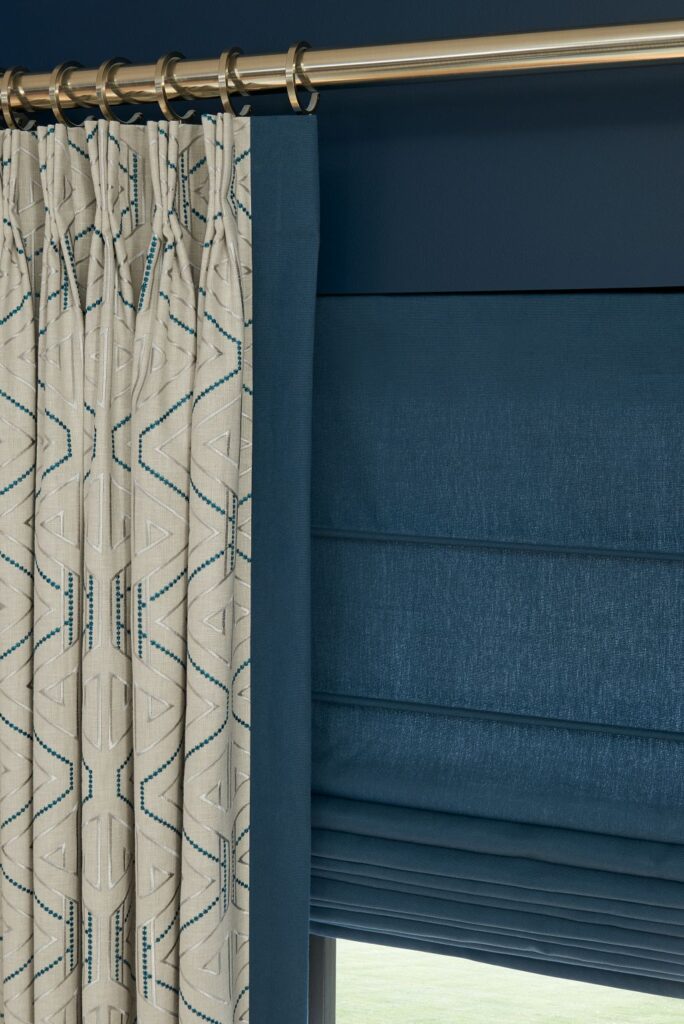
In some situations, layered treatments may be beneficial. A Roman shade can be paired with custom drapery when the homeowner wants added coverage and flexibility. The design must be carefully planned so both treatments operate properly and do not overcrowd the window.
Window Designs by Landy Brown offers blinds, draperies, shades, shutters, bedding and pillows, and motorized coverings. For a window-specific recommendation, the consultation should focus on how much light enters, how the room is used, and which performance concerns matter most.
Questions to Ask During Your Consultation
Before selecting Roman shades, consider the conditions in each room:
- Does the room feel cold near the windows during winter?
- Does afternoon sunlight cause excessive summer heat?
- Is glare interfering with television viewing or computer work?
- How much privacy is needed during the day and at night?
- Should the shade preserve soft natural light or darken the room?
- Is an inside or outside mount more appropriate?
- Would motorization make daily operation easier?
- Are there children or pets in the household?
- Are any windows difficult to reach?
- Should several shades match exactly or simply coordinate?
Sharing these priorities helps a window treatment professional recommend an appropriate combination of fabric, lining, style, and operation. It also ensures the final design is based on real household needs rather than appearance alone.
Serving Waukesha, Oconomowoc, and Surrounding Communities
Local conditions matter when selecting window treatments. A design that works well in a mild climate may not provide the coverage a Wisconsin homeowner wants during a freezing winter or a sunny, humid summer.
Window Designs by Landy Brown understands the seasonal conditions affecting homes in Waukesha, Oconomowoc, and surrounding communities. Professional guidance can help homeowners compare fabric weights, lining options, mounting methods, and operating systems without overlooking practical details.
Whether the project includes one uncomfortable room or a coordinated group of windows, custom energy-efficient Roman shades in Waukesha can provide an attractive combination of softness, privacy, light control, and seasonal comfort.
Schedule a Custom Roman Shade Consultation
The most effective Roman shade is one designed specifically for its window and the people who use the room. Accurate measurements, appropriate fabric, a purposeful lining, and professional installation all contribute to the final result.
Window Designs by Landy Brown can help you explore energy-efficient Roman shades in Waukesha and determine which design options best fit your home. During your consultation, you can compare materials, discuss privacy and light-control goals, and evaluate whether manual or motorized operation is most convenient.
To begin planning custom Roman shades for your Waukesha-area home, contact Window Designs by Landy Brown at (262) 490-1541 or Landy@windowsbylandy.com.
Comments are closed