
Selecting soft window treatments involves more than finding a fabric that looks attractive. The material must work with the room’s natural light, provide the desired privacy, fit the window correctly, and complement the way the space is used. A free in-home soft window treatment consultation in Sussex gives homeowners the opportunity to consider all these details without relying on guesswork or evaluating fabrics under unfamiliar showroom lighting.
Window Designs by Landy Brown provides custom window treatments for homeowners in Sussex, Oconomowoc, and surrounding Wisconsin communities. Available solutions include draperies, soft shades, blinds, shutters, and motorized coverings. During an in-home appointment, customers can discuss their goals, view samples beside their furnishings and finishes, and receive recommendations based on their actual windows.
What Are Soft Window Treatments?
Soft window treatments are products made primarily from fabric or other flexible materials. Custom draperies and fabric Roman shades are among the most familiar examples. Depending on the selected product and design, soft treatments can filter sunlight, provide privacy, reduce glare, create stronger room darkening, and add visual softness to a room.
Unlike hard treatments such as blinds and shutters, soft window treatments introduce folds, texture, movement, and fabric color. They can be understated and tailored or detailed and expressive. Their appearance depends on the material, lining, fullness, heading style, hardware, proportions, and installation.
A free in-home soft window treatment consultation in Sussex helps customers understand how these individual decisions work together. Rather than selecting fabric in isolation, homeowners can see how a proposed treatment relates to the window, wall color, flooring, furniture, room dimensions, and natural light.
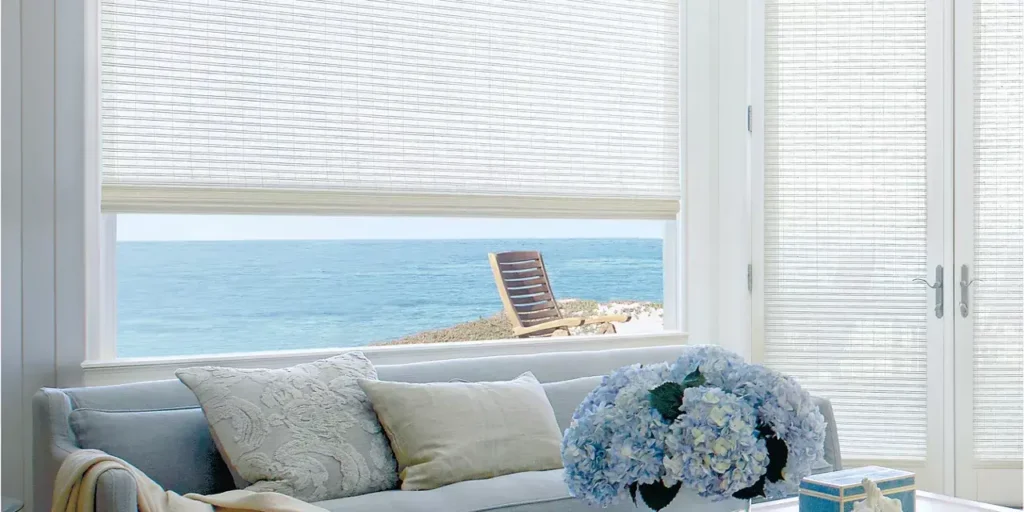
Why an In-Home Consultation Is So Valuable
A window treatment is ultimately experienced inside the home, so evaluating options there provides meaningful advantages. Colors and textures can change considerably under different lighting. A neutral fabric that looks cool in one setting may appear warmer beside natural woodwork or in late-afternoon sunlight.
The consultant can also inspect the window’s dimensions, depth, trim, hardware, and surrounding space. Nearby furniture, radiators, baseboards, vents, doors, and built-ins may influence the recommended treatment.
Homeowners can explain what is and is not working with their current window coverings. Perhaps a living room feels exposed after dark, a bedroom becomes bright too early, or sunlight creates glare in a home office. These observations allow the consultation to focus on practical needs as well as appearance.
Conducting the appointment in the room where the treatment will be installed makes the conversation specific. Advice can be based on the actual home rather than a hypothetical example.
Begin with the Way You Use the Room
The right soft window treatment depends heavily on the room’s purpose. A formal dining room may call for an elegant fabric with carefully structured folds. A family room may need a more relaxed material that filters light and operates easily every day. A bedroom may require stronger privacy and light control.
During a free in-home soft window treatment consultation in Sussex, homeowners can describe their daily routines and priorities. Useful details include when the room receives direct sunlight, whether the treatment will be opened every morning, and how much privacy is needed during the day and at night.
The consultant may also ask whether children or pets use the room, whether windows need to remain easy to access, and whether motorization would simplify operation. These practical details help shape a treatment that is attractive and convenient.
Custom Draperies for Sussex Homes
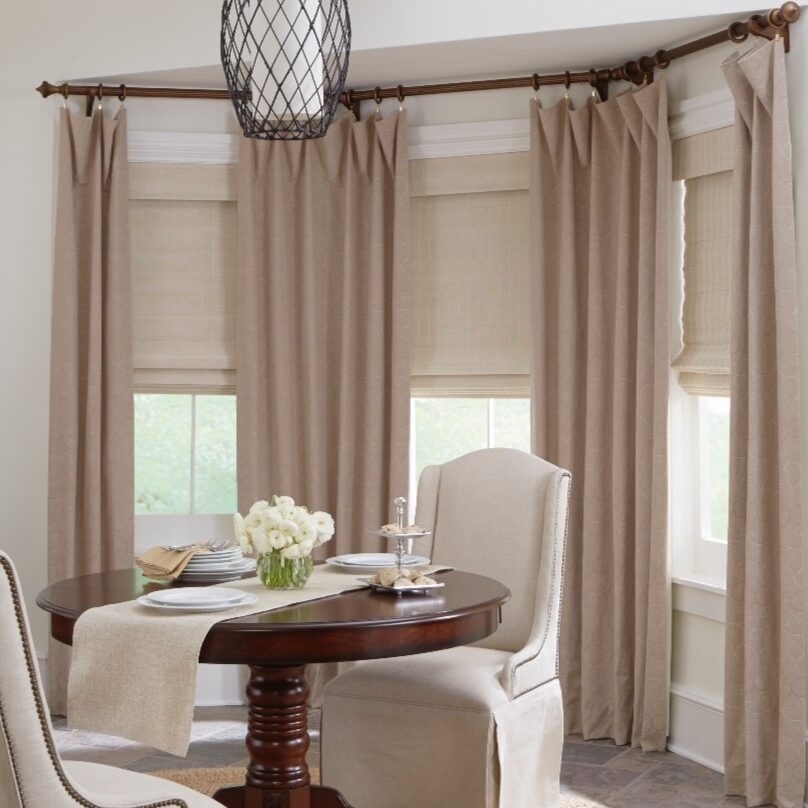
Custom draperies provide extensive freedom in fabric, length, fullness, lining, heading style, and hardware. They can frame a window without covering much of the glass, traverse fully across the opening, or work as part of a layered window treatment.
The term “custom” is important. The dimensions and construction are planned for the individual room rather than selected from a limited set of ready-made sizes. This allows the draperies to relate more naturally to ceiling height, window width, furniture placement, and architectural details.
Full-length panels can visually emphasize height and create a finished appearance. Shorter treatments may be appropriate in specific situations, although the proportion should be considered carefully. The placement of the rod also affects how much glass remains visible when the draperies are open.
Custom construction gives homeowners more control over the final result, but it also introduces more choices. Professional guidance can make those decisions manageable and help prevent combinations that look appealing separately but do not work well together.
Roman Shades for Tailored Fabric Coverage
Roman shades combine the softness of fabric with the compact operation of a shade. When lowered, the material covers the window. When raised, it forms folds near the top.
These shades can suit traditional, transitional, and contemporary interiors depending on their construction and fabric. A simple, structured style may create clean horizontal lines, while a softer design can introduce more relaxed folds.
A free in-home soft window treatment consultation in Sussex allows homeowners to compare Roman shade styles against the scale and architecture of their windows. The consultant can explain how the fabric may fold, how much space the raised shade occupies, and which operating systems are available.
Roman shades can be used alone or paired with drapery panels. Used alone, they create a focused treatment within or around the window opening. When layered with draperies, they provide another level of light control and visual depth.
Understanding Light-Filtering Fabrics
Light-filtering materials soften incoming sunlight without eliminating it. They can reduce harsh brightness and create a more comfortable, diffused glow.
The amount of filtering varies substantially. A loosely woven material may allow considerable light into the room, while a denser fabric can create more coverage. Fabric color also influences the effect. Light materials may produce a bright atmosphere, while deeper tones can change the color and intensity of transmitted light.
Light-filtering does not necessarily mean private at night. When interior lights are on, silhouettes or room details may be visible through some fabrics. Homeowners should discuss both daytime and nighttime expectations before selecting a material.
Viewing a sample directly against the window is one of the best ways to understand its behavior. The fabric should be evaluated during the hours when the room receives its strongest sunlight whenever possible.
Room-Darkening Options for Bedrooms and Media Spaces
Room-darkening treatments use materials or linings designed to block a substantial amount of incoming light. They may be appropriate for bedrooms, nurseries, media rooms, or households with varying sleep schedules.
A room-darkening lining can be added to compatible drapery fabrics, giving homeowners greater decorative flexibility while supporting stronger light control. Roman shades may also be constructed with room-darkening materials or linings.
However, room darkening is not always the same as complete blackout. Light may enter around the sides, above the treatment, below the hem, or through spaces required for hardware and operation.
The mounting method, treatment width, overlap, returns, and layering all affect the final result. A free in-home soft window treatment consultation in Sussex provides an opportunity to examine the window and discuss realistic ways to minimize unwanted light.
Privacy During the Day and at Night
Privacy needs can change throughout the day. In daylight, homeowners may want natural light without leaving the room fully exposed. After sunset, illuminated interiors can become more visible from outside.
The appropriate solution depends on the window’s location. A second-story window facing a wooded area may require less coverage than a ground-floor window beside a sidewalk or neighboring home. Bathrooms and bedrooms typically require more dependable privacy than dining areas or rear-facing living spaces.
Sheer fabrics can soften the view and add a degree of daytime screening, but they generally do not create complete nighttime privacy. Lined draperies and more opaque shades provide stronger coverage when closed.
Layering can offer flexibility. A lighter treatment can remain in place during the day, while an opaque layer closes at night. Controls should remain accessible and intuitive when more than one product is installed at the window.
Choosing Fabric in Your Actual Lighting
Color is one of the most difficult aspects of window treatment selection because it is influenced by its surroundings. Wall color, flooring, artificial lighting, window direction, and even landscaping outside can affect how a fabric appears.
Northern light tends to feel cooler and more even. Southern exposure can be brighter and warmer. East-facing rooms receive strong morning light, while west-facing rooms may experience intense late-afternoon sunlight.
With a free in-home soft window treatment consultation in Sussex, fabric samples can be held beside the actual window and compared with nearby surfaces. Homeowners can see whether a color blends quietly, creates contrast, or introduces an unintended undertone.
Texture should also be evaluated from several distances. A subtle weave may be highly visible up close but appear almost solid from across the room. A bold pattern may feel balanced on a small sample yet become much more prominent when repeated across full drapery panels.
Pattern, Scale, and Room Proportions
Patterns can bring personality to a window treatment, but their scale should relate to the room and the amount of fabric used.
A large pattern may work beautifully on full-height draperies in a spacious room. On a small Roman shade, portions of the motif may be cut off or less noticeable. A small geometric or subtle texture can add interest without becoming the room’s dominant feature.
Pattern placement also matters. Custom construction allows the workroom to consider how motifs repeat, align, and appear across multiple panels. This attention to detail can be especially important when several windows are visible together.
Homeowners do not need to avoid pattern simply because a room already contains other colors or textures. The objective is to create a deliberate relationship among the elements rather than match everything exactly.
The Importance of Lining
Lining is an essential part of many custom soft treatments. It can improve fullness, help the face fabric hang properly, provide greater privacy, and support stronger light control.
Different linings serve different purposes. A standard lining may add body and create a more finished appearance from outside. A room-darkening lining blocks more light. Interlining introduces another layer between the decorative fabric and the outer lining, creating additional fullness and substance in compatible treatments.
No lining can make fabric immune to environmental effects. Sunlight, humidity, repeated handling, and normal aging can influence textiles over time. However, selecting an appropriate lining can support the treatment’s performance and appearance.
During a free in-home soft window treatment consultation in Sussex, the consultant can explain how available lining choices will affect the weight, opacity, drape, and final look of the selected fabric.
Selecting the Right Drapery Heading
The heading is the upper portion of a drapery panel where the fabric connects with the rod or track. Its construction affects the drapery’s folds, fullness, and overall personality.
Pleated headings create structured folds and can range from traditional to highly tailored. Ripple-style treatments form soft, consistent waves and often suit contemporary interiors. Rod-pocket and other stationary styles may be appropriate when panels are intended primarily to frame the window rather than open and close frequently.
The operating method should guide the decision. Draperies that traverse every day need a heading and hardware system designed for smooth movement. Decorative stationary panels have different requirements.
Ceiling height and room scale matter as well. Some headings create a stronger vertical effect, while others have a softer and more casual appearance. Comparing examples helps homeowners understand how a heading changes the same fabric.
Decorative Rods and Traversing Hardware
Hardware supports the treatment physically and contributes to its design. Decorative rods, rings, finials, brackets, and finishes can coordinate with lighting, furniture, cabinetry, or other architectural elements.
A traversing rod or track allows draperies to open and close without pulling directly on the fabric. This can make operation smoother and reduce frequent handling of the material.
The width and weight of the treatment influence hardware selection. A broad window with lined, full-length panels requires suitable support. Bracket placement must account for wall construction, trim, projection, and the space needed for the draperies to stack when open.
During a free in-home soft window treatment consultation in Sussex, the window and surrounding wall can be evaluated to determine where the hardware should be placed and how it will affect the finished proportions.
Mounting Draperies Higher and Wider
Installing drapery hardware above and beyond the window opening can change the room’s visual proportions. Higher placement may emphasize ceiling height, while extending the rod beyond the window can allow panels to stack away from more of the glass.
This approach can make the window appear larger and preserve natural light when the draperies are open. However, the available wall space, ceiling height, furniture, adjacent windows, and room corners must be considered.
Extending too far may make the panels look disconnected from the window. Mounting too high without sufficient fabric length can create awkward proportions. The best placement is determined by the room rather than a universal formula.
Professional measurement helps establish a height and width that feel intentional and allow the treatment to function properly.
Layering Draperies with Shades, Blinds, or Shutters
Soft treatments can work alone, but layering them with another custom window covering provides additional flexibility.
A Roman shade paired with drapery panels creates coordinated fabric layers. Draperies over a blind allow precise slat control during the day and broader coverage when the panels are closed. Shutters combined with side panels create an architectural foundation with added softness.
Layering can help address competing needs. One product may manage daytime glare, while another provides nighttime privacy. A functional shade can handle everyday operation, while stationary drapery panels contribute color and proportion.
A free in-home soft window treatment consultation in Sussex makes it possible to evaluate whether the window has enough depth and surrounding space for a layered design. Controls, handles, panel movement, and hardware projection must be planned so the products do not interfere with one another.
Motorized Draperies and Soft Shades
Motorization can make soft window treatments easier to operate, particularly across wide windows, patio doors, tall openings, or areas behind furniture.
Motorized draperies travel along a compatible track using a remote, wall control, application, or connected system, depending on the selected product. Motorized Roman shades raise and lower without requiring the user to adjust the fabric manually.
Scheduling can help homeowners manage light and privacy consistently. Treatments may open in the morning, close before strong afternoon sunlight, and return to a privacy position after sunset.
Compatibility depends on treatment size, weight, construction, hardware, power source, and control platform. Homeowners who already use a smart-home system should identify it during the consultation so appropriate products can be considered.
Motorization should support the way the household lives. Some customers want advanced schedules and grouped controls, while others simply prefer a dedicated remote.
Soft Treatments for Living Rooms
Living rooms often need a balance of natural light, privacy, comfort, and visual character. Custom draperies can frame a view, soften the architecture, and add vertical emphasis. Roman shades provide adjustable fabric coverage in a more compact form.
The treatment should be planned around the room’s seating arrangement. Panels must not interfere with furniture, floor vents, radiators, or frequently used doors. Television glare and late-day sunlight may also influence fabric and lining choices.
If the room contains several windows, the treatments should create a coordinated rhythm. They do not necessarily need to be identical, but their proportions, materials, and hardware should relate naturally.
Soft Treatments for Bedrooms
Bedrooms typically require dependable privacy and comfortable control over morning and evening light. Lined draperies, room-darkening Roman shades, or layered combinations may be appropriate.
The bed’s location can affect how light reaches the sleeping area. A small gap that seems insignificant from across the room may be more noticeable when it aligns directly with the pillows.
During a free in-home soft window treatment consultation in Sussex, homeowners can explain their sleeping habits and light sensitivity. The consultant can then recommend materials, mounting methods, overlap, and coverage based on those expectations.
Motorized operation may be useful for broad windows or homeowners who want scheduled opening and closing. A morning program can admit natural light, while an evening setting can restore privacy.
Soft Treatments for Dining Rooms
Dining rooms provide an opportunity to use fabric more expressively. Color, texture, pattern, tailored folds, and decorative hardware can help establish the atmosphere of the space.
The treatment should still function effectively. Late-afternoon glare can make dining uncomfortable, and windows visible from a street or neighboring property may require privacy after dark.
Full-length draperies can create elegance, while Roman shades offer a more contained treatment. Layering the two can deliver both flexibility and depth when the room and window dimensions support it.
Fabric should be viewed near the dining table, flooring, wall color, and lighting fixtures. The treatment will be experienced as part of the entire room, not as an isolated sample.
Soft Treatments for Home Offices
A home office needs comfortable daylight without distracting glare. Direct sunlight on computer screens can make detailed work and video meetings difficult.
A fabric shade can filter or block incoming light depending on its opacity. Draperies may be drawn partially to address sunlight entering from one side. Motorization makes quick adjustments possible without leaving the desk.
The background visible during video calls may also influence the selection. A well-proportioned treatment can create a more orderly setting without becoming visually distracting.
Privacy should be evaluated according to the office’s location and schedule. Homeowners who work after dark may need more coverage than someone who uses the room only during daylight hours.
Working Around Patio Doors and Large Windows
Patio doors and broad window walls require treatments that account for frequent access, wider spans, and substantial fabric weight.
Draperies can move horizontally along a traversing rod or track, making them a natural option for sliding doors. The stacking area must be considered so the panels do not obstruct the doorway when open.
For wide windows, the treatment may be divided into multiple sections. Hardware strength, seam placement, pattern alignment, and control location all become important.
A free in-home soft window treatment consultation in Sussex gives the consultant an opportunity to observe door direction, handles, walking paths, furniture placement, and available wall space. These details help ensure that the finished treatment supports normal movement through the room.
Custom Measurement Prevents Costly Fit Problems
Soft window treatments rely on accurate proportions. Draperies that are too short can appear unfinished. Panels that are too narrow may lack appropriate fullness or fail to close adequately. A Roman shade that does not fit the opening correctly may leave excessive gaps or interfere with the frame.
Professional measurement includes more than recording width and height. The consultant evaluates trim, depth, floor variation, ceiling height, hardware placement, projection, obstructions, and the relationship between nearby windows.
Floors and ceilings are not always perfectly level, particularly in established homes. Measuring at appropriate points helps the finished treatment account for those conditions.
Custom dimensions also allow the design to relate to the entire wall. A treatment can be planned to frame the window, emphasize height, preserve glass area, or provide broader coverage according to the homeowner’s priorities.
Professional Installation Completes the Design
Even a carefully constructed treatment can disappoint if the hardware is positioned incorrectly. Professional installation helps ensure that rods, tracks, brackets, and shades are securely mounted and properly aligned.
The installer can verify that drapery panels move smoothly, Roman shades raise evenly, motorized systems respond correctly, and hems relate appropriately to the floor or sill.
Installation is also the point when final adjustments may be made to hooks, folds, limits, or programming. Homeowners can learn how to operate the treatment and understand basic care before the appointment is complete.
A professionally managed process connects consultation, measurement, fabrication, and installation rather than treating them as unrelated steps.
Caring for Custom Soft Window Treatments
Care requirements depend on the fabric, lining, construction, and hardware. Homeowners should follow the instructions provided for their specific product.
Routine dust removal may involve a soft brush, gentle vacuuming with an appropriate attachment, or another manufacturer-approved method. Spot cleaning should not be attempted without confirming that it is suitable for the material.
Repeated handling can transfer oils and soil to the fabric. Traversing hardware, batons, or motorization can reduce the need to touch the panels directly.
Roman shades should be raised and lowered according to their operating instructions. Furniture and other objects should not obstruct the shade’s path. If a treatment begins moving unevenly or a motorized system behaves unexpectedly, homeowners should seek professional guidance rather than forcing it.
Preparing for Your Consultation
Homeowners do not need to have every design decision made before the appointment. The purpose of a free in-home soft window treatment consultation in Sussex is to explore possibilities and turn general preferences into a practical plan.
Before the visit, it can be helpful to identify:
- Which windows need new treatments
- The times when glare or direct sunlight is strongest
- Daytime and nighttime privacy requirements
- Whether the treatment will operate daily
- Preferred colors, textures, or patterns
- Rooms needing stronger light control
- Furniture that must remain near the window
- Windows or doors that are difficult to reach
- Interest in motorized operation
- Existing blinds, shades, or shutters that may remain
Inspiration images or fabric swatches can communicate preferences, but they are not required. The consultant can guide the conversation through samples and examples.
Questions to Ask Before Ordering
Customers should understand how the proposed treatment will look, operate, and perform. Useful questions include:
- Is the selected fabric appropriate for the window’s sunlight?
- What type of lining is recommended?
- How much nighttime privacy will the treatment provide?
- Will the material filter light or darken the room?
- Where should the hardware be mounted?
- How much wall space will the open draperies occupy?
- Will the treatment interfere with furniture or doors?
- Is motorization available?
- What power source does a motorized treatment require?
- Can the treatment be layered with an existing blind or shade?
- What care method is recommended?
- How will patterns align across multiple panels?
- What will be visible from outside the home?
- How should several windows in the same room coordinate?
A detailed conversation helps ensure that the final selection reflects both the homeowner’s preferences and the window’s practical requirements.
Personalized Window Treatment Guidance in Sussex
Custom soft window treatments can transform the way a room manages light, privacy, proportion, and color. The most successful designs are created by considering the fabric and the window as part of the complete room.
A free in-home soft window treatment consultation in Sussex allows homeowners to explore draperies, Roman shades, linings, hardware, layering, and motorization in the environment where the treatments will be installed. Samples can be compared with existing finishes, and recommendations can reflect the home’s real sunlight, dimensions, and daily routines.
Window Designs by Landy Brown serves Sussex, Oconomowoc, and surrounding Wisconsin communities with custom blinds, draperies, shades, shutters, and motorized coverings. Whether the project involves one challenging window or several rooms, professional guidance can help turn initial ideas into a coordinated, functional design.
To arrange a free in-home soft window treatment consultation in Sussex, call Window Designs by Landy Brown at (262) 490-1541 or email Landy@windowsbylandy.com.
No responses yet