
Window treatments help control privacy, sunlight, glare, and nighttime comfort, but homes with infants and young children need another priority: avoiding accessible cords and other preventable hazards around the window. For families researching child-safe curtain options in Rubicon, the safest starting point is a cordless design selected for the specific window and installed with secure, appropriate hardware.
The U.S. Consumer Product Safety Commission advises that cordless window coverings are the safest choice in homes where young children are present. That guidance applies anywhere children live, sleep, play, or visit. Curtains may appear simple because the fabric itself has no lift cord, yet the complete treatment—including traverse controls, tiebacks, rods, brackets, nearby furniture, and any layered shade—must be considered together.
Window Designs by Landy Brown provides in-home window treatment guidance in Rubicon, Oconomowoc, and surrounding Wisconsin communities. A personalized consultation can help families compare cordless draperies, fabric shades, blinds, shutters, and motorized coverings while accounting for window dimensions, privacy, room-darkening needs, and daily use.
What “Child-Safe” Should Mean at the Window
No household product makes a room completely risk-free, and no window treatment replaces active supervision. In this article, “child-safe” refers to choices designed to reduce known hazards—especially accessible operating cords—while supporting secure installation and age-appropriate room planning.
The Window Covering Safety Council urges families with infants and young children to use cordless coverings or products with inaccessible cords. Parents and caregivers should also keep cribs, beds, toys, and climbable furniture away from windows and window covering cords. These principles are more important than any particular fabric, color, or style.
The best child-safe curtain options in Rubicon combine a cordless or inaccessible-control system with hardware suited to the treatment’s weight. They should operate without loose loops, dangling pull cords, or makeshift accessories that introduce new hazards.
Why Curtains Require a Whole-System Review
People often use “curtains” and “draperies” interchangeably. Both generally describe fabric panels hung from rods or tracks. Some are stationary and remain at the sides of the window. Others traverse across the opening to provide privacy and light control.
A stationary panel may have no operating cord, making it inherently different from an older cord-drawn traverse treatment. However, a child may still pull on long fabric, climb nearby furniture to reach the rod, or interact with decorative holdbacks. That is why child-safe curtain options in Rubicon must account for the complete installation. A functional drapery can be opened with a hand-draw design, baton, motor, or—on older systems—a cord, and each method creates a different safety profile.
When evaluating child-safe curtain options in Rubicon, families should look beyond the panel fabric. The rod or track, finials, brackets, hooks, rings, carriers, control method, finished length, tiebacks, and nearby furnishings are all part of the installation.
Cordless Hand-Draw Draperies
Hand-draw draperies move by gently guiding the leading edge of the fabric across a rod or track. Because they do not require an operating cord, they can provide a straightforward option for homes with young children when professionally specified and installed.
Where Hand-Draw Draperies Work Well
Hand-draw panels can suit standard windows, patio doors, and wider openings when the hardware is designed for smooth movement. The treatment needs enough stack space to clear the glass or doorway, and the rod or track must support the fabric and lining weight.
Frequent direct handling can transfer oils or soil to the leading edge. A short, rigid baton may be available on some systems to reduce fabric contact, but its length and placement should be assessed carefully in a child’s room. The professional should explain the intended operation and any removable components.
Avoiding Improvised Pulls
Homeowners should not add homemade loops, ropes, ribbons, or long pulls to make a drapery easier to reach. An improvised control can undermine the purpose of choosing a cordless treatment. If hand operation is awkward, a different hardware configuration or compatible motorization may be more appropriate.
For accessible windows, hand-draw panels are among the child-safe curtain options in Rubicon that combine fabric softness with uncomplicated operation. The final design should keep moving parts simple and hardware securely mounted.
Stationary Drapery Panels
Stationary panels frame the window without traveling across it. They can add fabric, color, texture, and visual height while another treatment handles privacy and light control. Because the panels are not routinely opened and closed, they do not need a draw cord.
Stationary draperies are particularly useful when a cordless shade, blind, or shutter already provides functional coverage. The panels can remain at the sides while the inner treatment is adjusted throughout the day.
Planning the Length
Floor-length fabric creates a tailored vertical line, but panel length deserves careful thought in rooms used by young children. Puddled fabric can invite pulling, hiding, or play and may collect dust or interfere with floor vents. A precisely measured length that clears the floor slightly or meets it cleanly may be easier to manage.
Short curtains need equally careful proportions. Fabric should not hang within easy reach of a crib, changing table, bed, climbing structure, or play surface. Moving the furniture away from the window remains essential even when the treatment itself is cordless.
Secure Hardware
Children may tug on fabric, so brackets must be attached to a suitable mounting surface with hardware appropriate to the treatment and wall construction. Decorative rods and finials should not be treated as toys or grab bars. Professional installation helps match bracket number, spacing, and fasteners to the finished weight.
Motorized Draperies
Motorized draperies move along a compatible track using a powered system. Depending on the product, they may be controlled with a remote, wall control, app, smart-home platform, or programmed schedule. Motorization eliminates the need for a traditional draw cord and can reduce direct handling of the fabric.
For broad patio doors, tall windows, or treatments behind furniture, motorization may provide some of the most convenient child-safe curtain options in Rubicon. Families can close the draperies for bedtime or privacy without reaching behind a crib, leaning over a sofa, or leaving a long control within reach.
Choosing a Control Method
Handheld remotes should have a consistent storage location inaccessible to small children, particularly if they contain button batteries or removable parts. A wall control can be placed at an adult-friendly height. App control may be convenient for caregivers but should not be the only operating method if other household members need access.
Voice control and scheduled routines may be available through compatible systems, sometimes with an additional hub. Features vary, so compatibility should be confirmed for the chosen motor and platform.
Planning Power and Maintenance
Motorized tracks may use plug-in power, hardwiring, batteries, or other manufacturer-approved configurations. Power cords must be routed according to product instructions and kept inaccessible. Rechargeable or battery-powered components should be located where an adult can service them without unsafe climbing.
Motorization simplifies operation, but it does not replace supervision or sound room arrangement. Children should not play with moving panels, tracks, remotes, or control equipment.
Cordless Roman Shades
Roman shades use fabric that folds as it rises and forms a broad surface when lowered. They provide the softness of textile material in a compact window-sized format. Cordless operating systems are available in selected collections and sizes.
A cordless Roman shade is raised or lowered through an approved control mechanism without an accessible pull cord. Because the shade occupies the window opening rather than extending to the floor, it can be useful in nurseries, children’s bedrooms, playrooms, and family spaces.
When comparing child-safe curtain options in Rubicon, homeowners may pair cordless Roman shades with stationary side panels. The shade provides privacy and room-darkening control, while the panels frame the window without requiring another operating system.
Fabric and Lining Choices
The fabric determines color, pattern, texture, and how the shade folds. Lining can improve privacy, add body, and reduce more light. Room-darkening lining may be useful for sleep spaces, although no inside-mounted shade is guaranteed to eliminate all light around its edges.
Parents should define whether the goal is softened daylight, strong nighttime privacy, reduced morning light, or a very dark room. Those results may require different materials and mounting positions.
Inside and Outside Mounts
An inside mount places the shade within the window opening when enough depth exists. An outside mount can provide broader coverage and reduce some edge light, but it requires clear wall space and secure bracket placement. Window locks, cranks, and trim affect the decision.
Cordless Roller and Cellular Shades
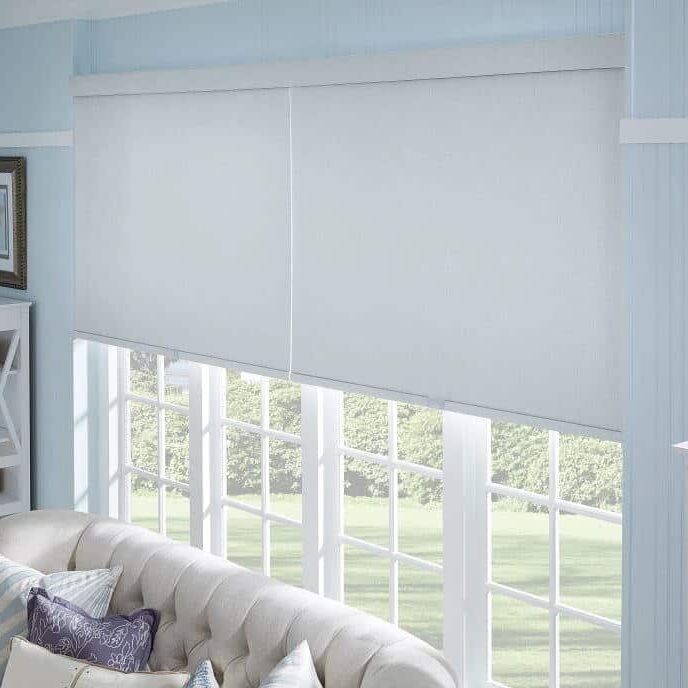
Roller and cellular shades are not curtains in the narrowest sense, but they are fabric-based window coverings that often meet the same privacy and light-control goals with compact, cordless operation.
Roller Shades
Roller shades use material that rolls near the top of the window. Options can range from light-filtering to room-darkening, and some fabrics offer texture or pattern. Cordless lift and compatible motorization may be available depending on the product and dimensions.
Their simple shape makes them useful behind stationary drapery panels. Families can achieve a layered appearance without combining two corded systems. Hardware and projection must be planned so the treatments do not interfere with one another.
Cellular Shades
Cellular shades have a honeycomb-like construction and fold into a compact stack. Cordless operation is available in many collections, and certain products offer top-down/bottom-up functionality. This can allow daylight from above while maintaining coverage at the lower portion of the window.
For bedrooms and nurseries, cellular shades may support privacy, softer daylight, and comfort near cold Wisconsin windows. Material opacity and side gaps should be reviewed before ordering.
These products broaden the range of child-safe curtain options in Rubicon by giving families fabric-based alternatives that do not require floor-length panels or exposed operating cords.
Interior Shutters as a Cordless Alternative
Interior shutters use hinged panels and adjustable louvers rather than fabric. Their ordinary operation does not require dangling lift cords, making them worth considering when a family wants architectural light control at the window.
Louvers can be tilted to reduce glare or exterior sightlines, and panels can swing open for full access. Product-specific tilt mechanisms, catches, magnets, and hinges should operate smoothly and remain securely installed.
Shutters can stand alone or be framed by stationary fabric panels. If layering is used, the drapery hardware must project far enough to clear the shutter panels when they open. The combined design should remain easy to operate without creating loose cords or long tiebacks.
Blinds with Cordless Operation
Modern blinds may offer cordless lift and wand tilt, depending on the product. The bottom rail is raised or lowered by hand, while a wand controls the slat angle. This removes traditional dangling lift cords while preserving familiar blind functionality.
Faux wood, real wood, and other blind materials differ in weight and room suitability. A large faux wood blind may be heavy to lift, while real wood may not be appropriate for a humid bathroom. Exact window measurements and product specifications should guide the selection.
Blinds can be paired with stationary drapery panels when the family wants textile softness around the window. In this layered version of child-safe curtain options in Rubicon, the inner blind should be genuinely cordless and the outer panels should not rely on a looped or dangling draw system.
Why Older Corded Treatments Deserve Attention
Families often focus on a new nursery while overlooking older coverings in guest rooms, living areas, grandparents’ homes, or spaces where children visit occasionally. Accessible cords can be hazardous even when a child is supervised nearby.
Inspect every window covering from the front, side, and back. Look for pull cords, continuous loops, inner cords, damaged components, and cords hidden behind furniture. Do not assume that tying a cord in a knot or placing it on a temporary hook makes an older product equivalent to a modern cordless covering.
The CPSC recommends replacing corded coverings with cordless products in homes where children are present. If immediate replacement is not possible, follow current official guidance for keeping cords inaccessible and seek information about appropriate retrofit measures. Retrofitting may reduce certain risks but does not necessarily make an older treatment as safe as a new cordless product.
Furniture Placement Is Part of Window Safety
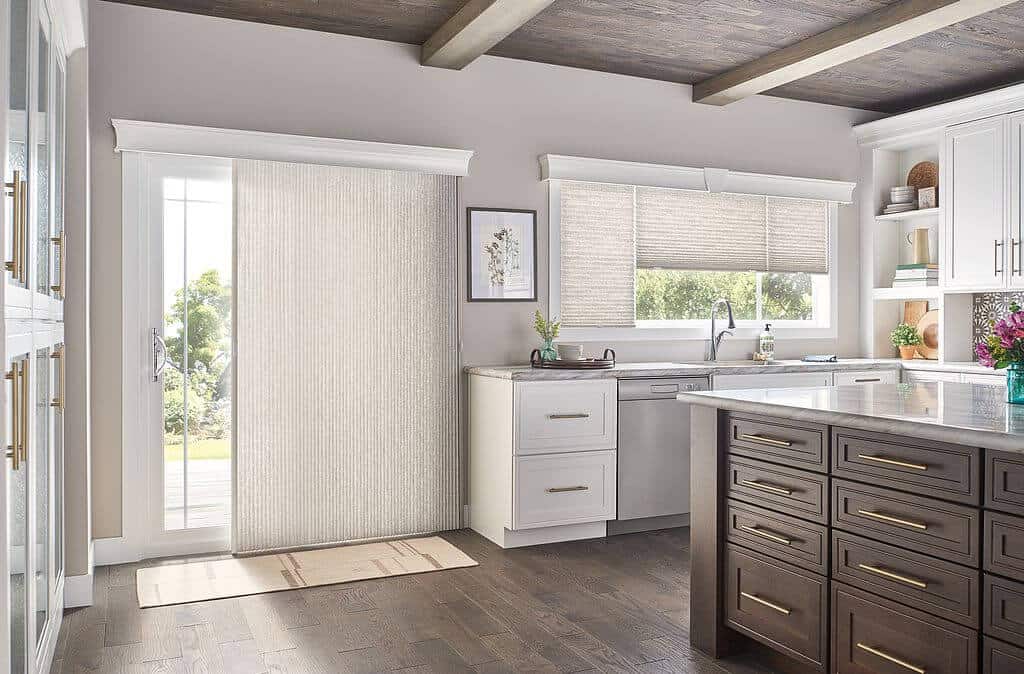
A cordless treatment is only one part of the room. Cribs, beds, chairs, toy chests, benches, and other climbable furniture should be placed away from windows. Children can use furniture to reach treatment hardware, window locks, glass, or cords that adults believed were inaccessible.
Preferably, place a crib or child’s bed against a wall without a window. Review the arrangement as the child grows because mobility and reach change quickly. A layout that works for an infant may need revision once the child can stand or climb.
For families selecting child-safe curtain options in Rubicon, the consultation is a useful time to discuss nearby furniture and how the treatment will be operated. The professional can identify clearance needs, but caregivers remain responsible for maintaining a safer room layout after installation.
Hardware, Tiebacks, and Decorative Components
Rods and Tracks
Rods and tracks must be rated for the treatment’s span and weight. Wide lined draperies can be heavy, requiring additional support brackets. Mounting into a suitable surface with appropriate fasteners is essential.
Finials and End Stops
Decorative finials should be secured according to the hardware system. On tracks, end stops and carriers should be checked during installation. Loose or removable components can create additional concerns in rooms used by small children.
Tiebacks and Holdbacks
Long fabric tiebacks, ropes, tassels, and looped accessories may be reachable or invite play. A stationary panel may not need a tieback at all. If a holdback is part of the design, use an appropriate fixed component and evaluate its location carefully.
Batons and Wands
Rigid drapery batons and blind tilt wands can provide cord-free control, but their length, attachment, and placement matter. Ask how each component is intended to be stored and whether it is appropriate for the room.
Designing Curtains for Nurseries
A nursery treatment often needs to reduce morning light, support nap schedules, provide privacy, and remain adaptable as the room changes. A cordless Roman, roller, or cellular shade may handle the functional requirements, with stationary panels added only when they serve a clear purpose.
Avoid positioning the crib beneath or immediately beside the window. Make sure the treatment can be operated without reaching over the crib, and do not use the crib rail to hold remotes, fabric, or controls.
Room-darkening materials can reduce light, but some edge glow is normal. Outside mounting, layered cordless treatments, or broader coverage may improve performance. Every added layer must still follow the cordless principle and be installed securely.
The strongest child-safe curtain options in Rubicon for a nursery are usually simple, easy for adults to operate, and free of unnecessary hanging accessories.
Window Treatments for Playrooms and Family Rooms
Playrooms experience active movement, rearranged furniture, and frequent handling. Treatments should be easy to use and maintain. Shorter window-sized shades may be more practical than floor-length fabric where children play directly beside the wall.
In family rooms, stationary panels can remain outside the main activity area while a cordless shade, blind, or shutter manages daily light. Motorized treatments may help caregivers adjust several windows at once without crossing a room full of toys or furniture.
Consider how the room is likely to change. A low toy shelf can become a climbing surface, and a sofa may be moved closer to a window. Reassess the layout periodically rather than treating installation day as the final safety review.
Room-Darkening Without Accessible Cords
Families do not have to choose between safer operation and meaningful light control. Cordless Roman shades, roller shades, cellular shades, motorized draperies, and layered cordless solutions can all reduce light when properly specified.
The design should address fabric opacity, lining, mounting position, side gaps, top gaps, center overlap, and floor clearance. A room-darkening label describes the material, not necessarily the entire installed window. Light may enter around any movable covering.
For child-safe curtain options in Rubicon, avoid adding unapproved clips, cords, ropes, or makeshift side restraints in an effort to block light. These items can introduce hazards or damage the treatment. Discuss the desired darkness level before ordering so appropriate components can be built into the plan.
Motorization for Whole-Home Child Safety Planning
Motorization can support a consistent cordless approach across bedrooms, gathering spaces, tall windows, and patio doors. Shades or draperies may be grouped so several move together, helping caregivers establish privacy or bedtime routines with one command.
New construction and renovation offer opportunities to plan hardwired power before walls are closed. Existing homes may use battery, rechargeable, or plug-in systems where suitable. Power cords and adapters must remain inaccessible and be routed according to product instructions.
Smart-home integration is optional. A simple remote or wall switch may be easier for some households. The selected system should provide dependable local control and a clear plan for battery maintenance, service, and internet outages.
Cleaning and Maintaining Child-Friendly Treatments
Window treatments in children’s rooms may collect dust, fingerprints, and occasional spills. Care instructions vary by fabric, lining, and hardware, so follow the manufacturer’s method.
Routine cleaning may involve a soft duster, microfiber cloth, or low-suction vacuum attachment. Some fabrics require professional cleaning. Avoid saturating motors, tracks, headrails, or electronic components.
Maintenance is also a chance to inspect the treatment. Confirm that brackets remain secure, hardware is complete, controls function normally, and no damaged part has created a new loop or loose element. Stop using a treatment that operates irregularly and seek professional guidance rather than improvising a repair.
Questions to Ask During a Consultation
Families can use an in-home consultation to ask specific questions:
- Is this treatment genuinely cordless, or does it have an inaccessible internal control?
- Are any loops, pull cords, or chains accessible from the front, side, or back?
- How will the drapery open and close?
- Can the hardware support the fabric and lining weight?
- Is the finished panel length practical for a child’s room?
- Are tiebacks or removable accessories necessary?
- Which room-darkening options are available without accessible cords?
- Can the treatment be motorized?
- Where will the power source and controls be located?
- How should remotes and batteries be stored?
- Will the treatment clear the crib, bed, furniture, window lock, and floor vent?
- What maintenance and inspection does the system require?
Clear answers help parents distinguish between a treatment that merely looks simple and one designed as a coordinated cordless installation.
Local Window Treatment Guidance in Rubicon and Oconomowoc
Homes in Rubicon, Oconomowoc, and surrounding Wisconsin communities include traditional residences, rural properties, remodeled homes, and new construction. Window sizes, wall materials, trim, floor vents, and furniture layouts vary, making in-home measurement especially valuable.
Wisconsin seasons also influence window treatment needs. Families may want strong room darkening during early summer mornings, soft daylight during winter, and coverage that helps rooms feel more comfortable near cold glass. The solution must address those goals without compromising the cordless priority.
Window Designs by Landy Brown offers blinds, draperies, shades, shutters, and motorized coverings. For families comparing child-safe curtain options in Rubicon, professional guidance can connect current safety recommendations with fabric preferences, privacy, light control, and the physical conditions at each window.
A Safer Window Starts with Simplicity
Child-conscious window treatment design is not about adding gadgets. It begins by removing accessible cords, avoiding unnecessary loops and accessories, securing the hardware, and keeping furniture away from windows. From there, families can choose fabric, color, opacity, and style with greater confidence.
Stationary panels, cordless shades, hand-draw draperies, shutters, cordless blinds, and motorized treatments can all play a role. The appropriate solution depends on whether the window must open frequently, how much light should be reduced, where children play or sleep, and how adults will operate the treatment.
Professionally planned child-safe curtain options in Rubicon should feel easy to use every day. When the safest choice is also the most convenient, families are less likely to improvise controls or leave privacy and light needs unmet.
Schedule a Personalized In-Home Consultation
If you are exploring child-safe curtain options in Rubicon, Window Designs by Landy Brown can help you compare cordless draperies, fabric shades, blinds, shutters, and motorized coverings for your home. An in-home consultation can address operating cords, hardware, panel length, room darkening, furniture clearance, power sources, and daily routines.
Window Designs by Landy Brown serves Rubicon, Oconomowoc, WI, and surrounding areas with custom window treatments measured and installed for the home. Schedule a personalized consultation to discuss safer, functional window covering choices for rooms where children live or visit.
Call (262) 490-1541 or email Landy@windowsbylandy.com to get started.
Comments are closed