
The right draperies can transform the appearance and performance of a window. Fabric introduces softness, movement, color, and dimension while also helping homeowners manage natural light and privacy. Achieving those results, however, requires more than selecting an attractive material. Accurate measurements, appropriate linings, well-proportioned panels, dependable hardware, and careful placement all contribute to the finished treatment. Professional custom drapery installation in Rubicon brings those details together, creating window coverings designed specifically for the room instead of forcing standard-sized panels to fit an individual space.
Window Designs by Landy Brown provides personalized window-treatment services for homeowners in Rubicon, Oconomowoc, and surrounding Wisconsin communities. With custom draperies, blinds, shades, shutters, bedding and pillows, and motorized coverings available, clients can coordinate their windows with the function and style of each room. Call (262) 490-1541 or email Landy@windowsbylandy.com to begin planning your project.
What Makes Custom Drapery Different?
Understanding the value of custom drapery installation in Rubicon begins with recognizing the difference between custom and ready-made treatments. Standard drapery panels are produced in predetermined widths and lengths. Although they may cover a basic window, they do not account for the exact dimensions of the opening, ceiling height, surrounding wall space, furniture placement, fabric repeat, desired fullness, or mounting conditions.
Custom drapery is planned around the specific window and room. The designer can determine how high the hardware should be placed, how far the rod should extend beyond the frame, where the panels should fall, and how much fabric is needed to create the desired fullness. These decisions influence both the visual proportions and the practical performance of the treatment.
A carefully planned drapery can make a small window appear more substantial, emphasize ceiling height, soften a wide wall, or frame an outdoor view. It can also provide privacy, filter or block sunlight, and coordinate with another window covering. Because the treatment is created for the individual space, homeowners have greater control over fabric, color, pattern, lining, heading style, hardware, and operation.
Why Professional Drapery Installation Matters
Choosing a beautiful fabric is only one part of a successful drapery project. Professional custom drapery installation in Rubicon ensures that the completed panels are positioned and supported correctly. Even a well-made drapery can look uneven or function poorly if the rod is installed at the wrong height, the brackets are not properly anchored, or the panels do not have enough clearance.
Placement affects the perceived size and shape of the window. Hardware mounted too close to the frame may make the opening appear smaller and allow the stacked fabric to block natural light. A rod installed too low can interrupt the proportions of the wall. Panels that are too short may look unfinished, while excess fabric can gather awkwardly on the floor unless that effect is intentional.
Professional installers also account for the weight of the treatment. Custom drapery fabric, lining, interlining, decorative hardware, and wide panels can create a substantial load. Brackets must be appropriate for the span and secured to suitable structural support. This is particularly important for large windows, patio doors, layered treatments, and operable panels that will be opened and closed regularly.
Careful installation protects the investment while allowing the draperies to hang as intended. Pleats remain aligned, hems appear level, hardware operates smoothly, and panels can move without catching on nearby trim or furnishings.
Accurate Measuring Creates the Foundation
Every successful custom drapery installation in Rubicon starts with precise measurements. Measuring for drapery involves more than recording the width and height of the glass. The full wall, ceiling height, trim, sill, floor, nearby corners, vents, outlets, furniture, and other window coverings may all influence the design.
The installer must determine whether the hardware will mount on the wall, trim, or ceiling. The available stacking space on either side of the window affects how far the rod can extend. If the drapery is intended to open completely beyond the glass, enough width must be provided for the panels to stack without substantially obstructing the view.
Length requires equal attention. Panels may be designed to stop just above the floor, lightly touch it, break at the floor, or create an intentional puddled effect. A tailored treatment typically depends on consistent floor clearance, but floors and ceilings are not always perfectly level. Measurements taken at several points can reveal variations that should be addressed before fabrication.
Radiators, baseboard heaters, window seats, built-in cabinetry, counters, and deep sills may limit the available length or fullness. Patio doors require clearance for handles and daily traffic. Measuring these conditions in the home allows the drapery to be designed around real-world use.
Selecting the Right Drapery Fabric
Fabric selection is one of the most enjoyable parts of custom drapery installation in Rubicon, but it also requires practical consideration. The material determines more than color and pattern. Fiber content, weight, weave, texture, drape, durability, and light exposure all influence how the finished panels will look and perform.
Lightweight fabrics can create an airy, relaxed effect. They may filter natural light and soften the window without making the room feel visually heavy. Medium-weight fabrics offer versatility and are suitable for many pleated and gathered styles. Heavier fabrics can create a more substantial appearance and may support stronger light control when combined with an appropriate lining.
Pattern scale should correspond to the size of the panels and the proportions of the room. A small pattern can provide subtle interest, while a large motif may create a more dramatic focal point. Pattern matching must be included in the fabric calculations so motifs align across seams and between panels.
The direction and intensity of sunlight should also be considered. Strong sunlight can affect textiles over time, especially at windows with prolonged southern or western exposure. A suitable lining can help protect the decorative fabric while improving the appearance of the drapery from outside the home.
Texture offers another way to add depth. Linen-like weaves, smooth finishes, velvets, embroidered materials, and other tactile fabrics interact differently with light. Viewing samples in the room allows homeowners to see how the fabric responds to the home’s actual lighting, wall colors, flooring, and existing furnishings.
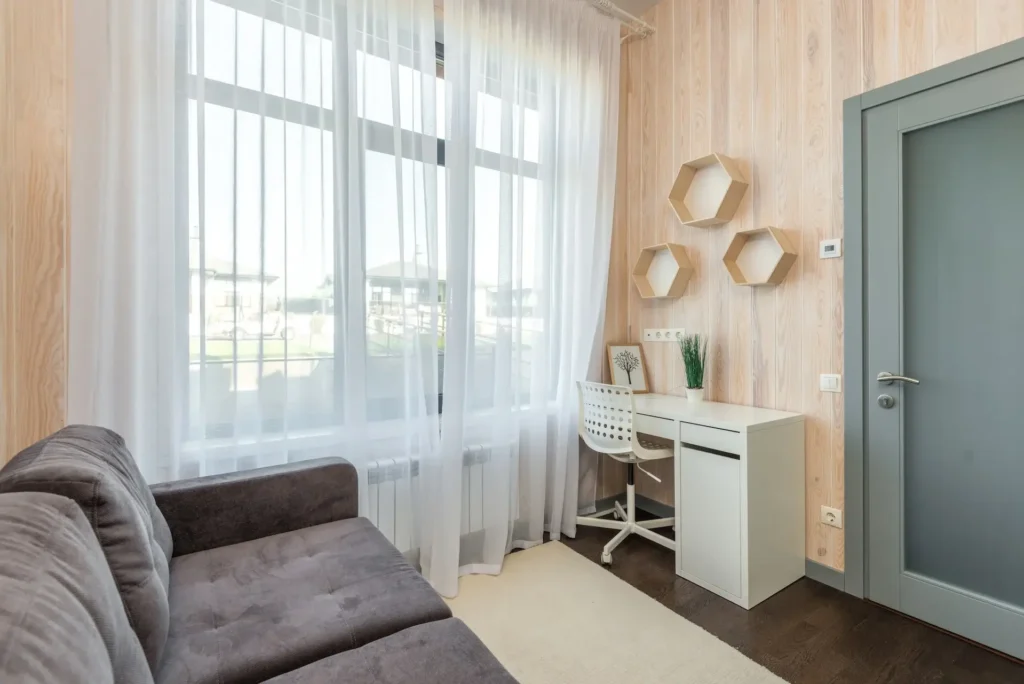
Choosing a Lining for Light Control and Privacy
The lining selected for custom drapery installation in Rubicon can significantly change the treatment’s performance. Although lining is positioned behind the decorative fabric, it influences privacy, fullness, light control, insulation, and how the panels hang.
A standard lining provides a finished backing and helps reduce the amount of light passing through the face fabric. It can improve privacy and create a more consistent exterior appearance. Lining may also protect the decorative material from direct contact with sunlight, although no fabric is completely immune to fading.
Room-darkening lining is appropriate when greater light reduction is desired. Bedrooms, nurseries, media rooms, and other spaces used for rest or screen viewing may benefit from this option. Small amounts of light can still enter around the edges or top of a treatment, so homeowners seeking maximum darkness should consider the complete design, including mounting height, return depth, panel overlap, and any underlying shade.
Interlining is placed between the face fabric and lining. It gives the drapery additional body and may contribute to a fuller, more luxurious appearance. It can also add another layer at the window. The suitability of interlining depends on the fabric, heading, hardware, and desired result.
The right lining should be selected at the same time as the face fabric. This allows the designer to evaluate the combined weight, opacity, drape, and hardware requirements before the treatment is fabricated.
Drapery Styles and Heading Options
Personalized custom drapery installation in Rubicon gives homeowners the opportunity to choose a heading that complements both the fabric and the architecture of the room. The heading is the finished upper portion of the panel where it attaches to the rod or track. It determines how the fabric forms folds and contributes significantly to the overall style.
Pinch-Pleat Draperies
Pinch pleats create evenly spaced, structured folds. Depending on the number and style of pleats, the treatment may appear formal, traditional, or tailored. Pinch-pleat panels work well with decorative rods or traversing hardware and retain their organized shape when opened or closed.
Ripple-Fold Draperies
Ripple-fold draperies form clean, continuous waves along a track. Their streamlined appearance is well suited to contemporary rooms, wide windows, and sliding doors. Because the folds remain relatively consistent, the treatment has an orderly appearance across a broad span.
Grommet Draperies
Grommet panels feature rings inserted directly into the fabric heading. The rod passes through the grommets, creating broad folds. This style has a casual, contemporary character, although the panels are generally operated by hand and may not be appropriate for every formal or frequently used opening.
Rod-Pocket Draperies
A rod-pocket panel contains a sewn channel through which the rod passes. This style can create a gathered appearance and works best for treatments that remain primarily stationary. Frequent opening and closing may be less convenient because the fabric does not glide as freely as it would on rings or traversing hardware.
Decorative and Tailored Headings
Other options can create relaxed folds, inverted pleats, cartridge-like shapes, or understated flat panels. The best heading depends on the desired style, fabric characteristics, frequency of operation, and hardware system.
Selecting Drapery Rods, Tracks, and Hardware
Hardware is a structural and visual component of custom drapery installation in Rubicon. The rod or track must support the weight and width of the completed treatment while coordinating with the room. Hardware that is too light for the fabric may bow or loosen, while hardware of the wrong scale can make the design feel unbalanced.
Decorative rods are available in different diameters, finishes, and profiles. Finials at the ends of the rod can be simple or ornamental. Rings, brackets, and holdbacks may coordinate with the rod or provide a subtle contrast.
Traversing rods and tracks allow the panels to open and close through a cord, baton, or motorized mechanism, depending on the system. They are especially useful for wide windows and draperies that will be operated daily. A track may be wall-mounted or ceiling-mounted and can remain discreet so the fabric receives most of the visual attention.
Returns are the portions of the drapery that extend from the front of the rod back toward the wall. Adequate returns can reduce side light and provide a more complete appearance. Overlap at the center is also important for privacy and light control when two panels meet.
Hardware placement must account for window trim, crown molding, ceiling height, doors, nearby walls, and the space required for the fabric to stack. Planning the panels and hardware together produces a more cohesive and functional result.
Layering Draperies with Blinds, Shades, or Shutters
One advantage of custom drapery installation in Rubicon is the ability to pair fabric panels with another custom window treatment. Layering gives homeowners more precise control over light, privacy, insulation, and appearance than either product might provide by itself.
A shade can handle everyday coverage while drapery panels frame the window. Cellular shades introduce an insulating honeycomb structure. Roller shades offer a clean, minimal layer. Roman shades combine soft fabric styling with vertical operation. Woven shades add texture, while room-darkening shades can support greater bedroom light control.
Blinds allow users to tilt the slats and redirect sunlight while the draperies remain open. Shutters provide a fitted architectural layer with adjustable louvers. When the draperies are closed over blinds or shutters, the combination provides fuller visual coverage and a softer appearance.
Layering is particularly helpful when stationary decorative panels are preferred. The panels can remain arranged at the sides of the window while the underlying blind, shade, or shutter provides privacy. Alternatively, fully operable draperies can close over the secondary treatment when additional coverage is required.
The products must be planned together to provide enough depth and clearance. The drapery should move freely without rubbing against a shade cassette, blind headrail, shutter frame, or projecting handle.
Custom Draperies for Different Rooms
Thoughtful custom drapery installation in Rubicon should reflect how each room is used. Fabric, lining, length, heading, hardware, and operation may vary throughout the home while coordinated colors or materials create continuity.
Living Rooms
Living-room draperies can frame a view, soften large windows, and add visual height. Homeowners may choose full-width operable panels for privacy or stationary panels combined with shades, blinds, or shutters. The fabric can remain neutral or introduce a controlled pattern that supports the room’s palette.
Bedrooms
Bedrooms often require greater privacy and light control. Lined or room-darkening draperies can be paired with an appropriate shade to reduce unwanted morning or evening light. Hardware placement, panel overlap, and side returns should be considered carefully when a darker room is desired.
Dining Rooms
Custom draperies can give a dining room a tailored or refined character. Pleated panels, decorative rods, and fabrics with subtle texture or pattern can complement the proportions of the space while providing evening privacy.
Home Offices
In a home office, draperies can soften the room and reduce harsh light. An underlying blind or shade may provide adjustable glare control throughout the workday, while drapery panels complete the window and create a polished background.
Kitchens
Draperies used in kitchens should be selected with nearby counters, sinks, cooking surfaces, and daily cleaning in mind. Shorter fabric treatments or stationary panels may be appropriate where full-length panels would interfere with cabinets or work areas. Any treatment near a cooking surface must be positioned safely.
Patio and Sliding Doors
Patio doors require treatments that move easily and clear the active doorway. Traversing or ripple-fold draperies can provide broad coverage, but enough stacking space must be available so the fabric does not obstruct regular access. Durable hardware is particularly important because the treatment may be opened and closed several times each day.
Managing Natural Light and Privacy
A major purpose of custom drapery installation in Rubicon is to provide the appropriate balance between daylight and privacy. That balance depends on fabric opacity, lining, panel fullness, mounting position, and whether the draperies are layered with another product.
Unlined sheer fabric filters and softens sunlight but provides limited privacy, particularly at night when indoor lights are on. A more opaque fabric with standard lining provides greater coverage. Room-darkening lining reduces more light and can improve privacy, but the overall result also depends on light entering around the edges.
Mounting draperies higher and wider than the window can increase coverage. Side returns bring the fabric toward the wall, reducing gaps at the ends of the rod. Center overlap helps keep two closing panels from separating.
Layering provides the most flexibility. During the day, a blind or shade can manage glare while drapery panels remain open. In the evening, the draperies can be closed to create a softer and more private interior. In a bedroom, both layers can be closed when stronger light reduction is desired.
The direction of the window should guide the selection. East-facing windows receive morning light, while west-facing windows may experience strong afternoon glare. South-facing windows often receive longer periods of sunshine. A designer can recommend fabric and lining combinations based on these conditions.
Motorized Drapery for Convenient Operation
Motorization can make custom drapery installation in Rubicon easier to use, especially for wide windows, tall openings, patio doors, or panels positioned behind furniture. Instead of pulling the fabric by hand, homeowners can operate compatible draperies through a remote, wall control, app, or connected system, depending on the selected equipment.
Motorized tracks help the panels move evenly and can reduce repeated handling of the fabric. This may be valuable for delicate materials, large treatments, and draperies that are opened and closed every day.
Scheduled operation can support a consistent household routine. Draperies may open in the morning, close when direct afternoon sun reaches the room, and return to a privacy position in the evening. Available scheduling and smart-home features depend on the motor and control system selected.
Power requirements should be discussed early in the design process. Some systems use batteries, while others may require access to electrical power. New-construction and remodeling projects may offer opportunities to plan wiring before walls and ceilings are completed.
Motorization must also be coordinated with panel weight, width, heading style, and track configuration. A professional can explain which drapery designs are compatible and help homeowners choose a system suited to the opening.
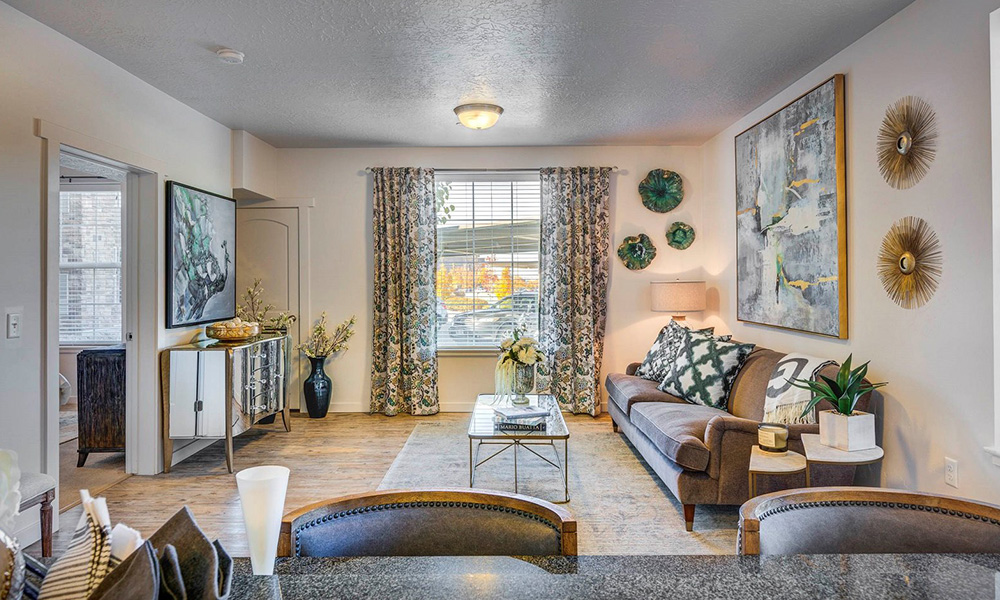
What to Expect During Drapery Installation
Professional custom drapery installation in Rubicon is the final stage of a detailed design and fabrication process. Before the appointment, the windows have been measured, fabric and lining selected, hardware specified, and panels created for the individual openings.
The installer begins by confirming the hardware position and reviewing the mounting surface. Brackets or tracks are secured using methods appropriate for the structure and weight of the treatment. Careful leveling is essential, particularly across wide windows where even a small variation may become noticeable.
After the hardware is installed, the drapery panels are attached and arranged. Pleats, folds, and hems are checked so the fabric hangs consistently. Operable treatments are opened and closed to confirm smooth movement and adequate clearance.
The installer may dress or train the fabric so the folds fall in the intended direction. Some materials relax naturally after hanging, while others may require more initial arrangement. Homeowners should follow the recommended care and operation instructions to maintain the appearance of the panels.
For layered windows, each treatment is tested to ensure that it operates without interference. The drapery should clear the blind, shade, or shutter, and the secondary treatment should remain accessible.
Common Drapery Planning Mistakes to Avoid
Choosing professional custom drapery installation in Rubicon can help homeowners avoid problems that commonly occur with improperly planned treatments. One frequent mistake is selecting panels that are too narrow. Without adequate fullness, closed draperies may appear flat and strained rather than forming attractive folds.
Incorrect length is another concern. Panels that end several inches above the floor can look undersized unless the design intentionally calls for a sill- or apron-length treatment. Panels that drag unintentionally may collect dust, interfere with movement, and lose their tailored appearance.
Hardware that is too short can cause stacked fabric to cover a large portion of the glass. A rod installed too low may visually compress the window and wall. Brackets that are not properly anchored can loosen under the weight of lined custom panels.
Selecting fabric without considering the heading can also create disappointing results. Some materials do not hold sharply structured pleats, while others may be too stiff or heavy for a relaxed treatment. Pattern repeat must be included in yardage calculations, especially when motifs need to align across several widths of fabric.
Homeowners should also consider how often the treatment will be operated. A decorative rod-pocket panel may look attractive but may not be the best choice for a patio door used several times per day. Design decisions should support the way the room functions.
Custom Drapery for Rubicon and the Oconomowoc Area
Local custom drapery installation in Rubicon gives homeowners access to personalized guidance from someone who understands the needs of homes throughout the Oconomowoc area and surrounding Wisconsin communities. Window dimensions, architectural styles, privacy conditions, and natural-light patterns vary from one property to another. An in-home consultation makes it possible to evaluate those details directly.
Window Designs by Landy Brown offers custom draperies as part of a broader collection that includes blinds, shades, shutters, bedding and pillows, and motorized coverings. This selection allows the window-treatment plan to be tailored to each opening. Draperies may be used independently, paired with a shade, layered over blinds or shutters, or coordinated with other custom fabric elements in the room.
Clients can compare samples in their own homes, where colors and textures can be viewed against the actual walls, flooring, furniture, and daylight. Professional measurement helps ensure that the finished panels have appropriate fullness, length, stack space, and clearance. Professional installation completes the project with properly placed hardware and carefully arranged fabric.
Schedule a Custom Drapery Consultation
If you are ready to improve your windows with color, softness, privacy, and carefully tailored proportions, custom drapery installation in Rubicon can provide a result designed specifically for your home. From fabric and lining to pleats, rods, tracks, and motorized operation, every component can be selected to support the appearance and function of the room.
Window Designs by Landy Brown serves Rubicon, Oconomowoc, and surrounding areas with personalized window-treatment design, professional measuring, and installation. Whether you need draperies for one important room or coordinated treatments throughout your home, Landy can help you compare materials and create a plan suited to your windows.
Call (262) 490-1541 or email Landy@windowsbylandy.com to schedule your consultation and begin designing custom draperies for your Rubicon-area home.
No responses yet