
Window treatments can do much more than provide privacy. They influence how sunlight enters a room, soften the appearance of windows, introduce texture and color, and help create a finished look that feels intentional. For homeowners searching for custom fabric window treatments in Rubicon, working with treatments designed specifically for the home offers far more flexibility than relying on standard, ready-made options.
Window Designs by Landy Brown provides personalized window treatment solutions for homeowners in Rubicon, Oconomowoc, and surrounding Wisconsin communities. With custom draperies, shades, blinds, shutters, motorized coverings, bedding, and pillows available, homeowners can create treatments that work with their individual windows and everyday needs.
Fabric treatments are especially versatile because nearly every part of the finished design can be customized. Fabric selection, texture, pattern, opacity, dimensions, lining, fullness, and operation can all influence how a treatment looks and performs.
Whether the goal is to add softness to a living room, improve privacy in a bedroom, manage sunlight in a home office, or create coordinated treatments throughout the house, custom design makes it possible to develop a solution around the actual space.
Why Choose Custom Fabric Window Treatments?
Ready-made window coverings are designed around standardized dimensions. That may work for certain windows, but it limits homeowners to the sizes, fabrics, and configurations available from the manufacturer.
With custom fabric window treatments in Rubicon, the process begins with the homeowner’s windows instead.
The dimensions of each window can be measured, the needs of the room considered, and materials selected according to the desired appearance and function. This allows homeowners to address windows that are unusually tall, wide, narrow, grouped together, or otherwise difficult to accommodate with standard products.
Customization also provides greater control over the final appearance. Instead of settling for a fabric that is close to the desired color or a panel that is nearly the correct length, homeowners can select materials and dimensions specifically for their rooms.
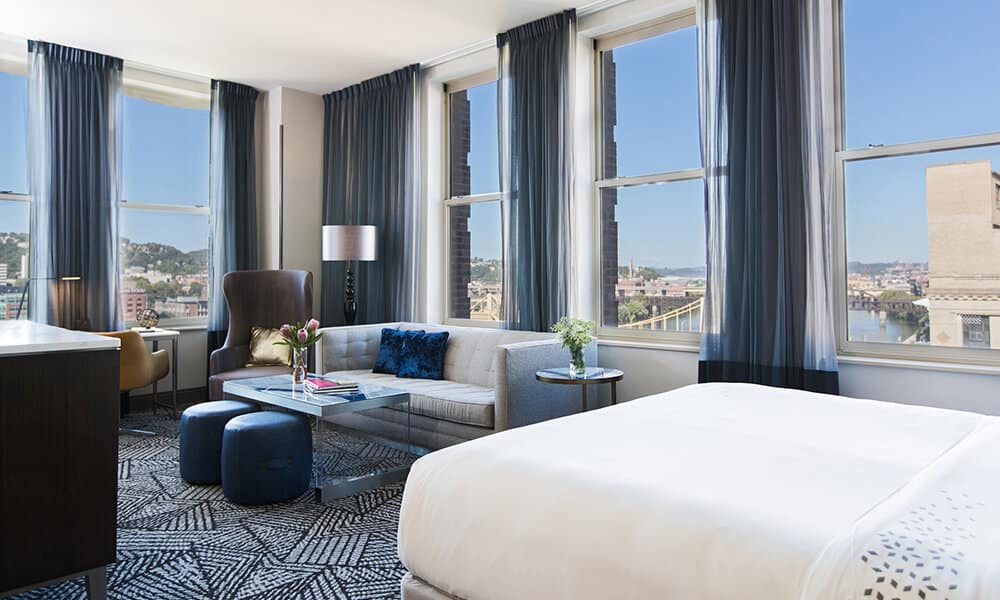
Exploring Different Types of Fabric Window Treatments
Fabric treatments are not limited to traditional curtain panels. There are several ways to incorporate fabric at a window depending on the amount of privacy, light control, softness, and functionality needed.
Custom draperies can provide substantial fabric coverage and can be designed as functional treatments or stationary panels. Roman shades provide the warmth of fabric in a more tailored format. Layered combinations can pair fabric treatments with blinds, shades, or shutters.
Choosing among these options depends on the individual window and room.
A homeowner may want full-length drapery in a living room, a Roman shade at another window, and a layered shade-and-drapery combination in the bedroom. Customization makes it possible for those different treatments to relate visually without requiring every window to be identical.
Custom Drapery for Rubicon Homes
Drapery remains one of the most versatile ways to introduce fabric to a window.
Homeowners considering custom fabric window treatments in Rubicon can use drapery to frame a view, soften architectural lines, increase privacy, control incoming light, or add greater visual presence to a room.
Stationary panels are an option when fabric is primarily being used to frame the window. They remain in position while another treatment, such as a shade or blind, handles everyday privacy and light control.
Functional draperies can travel across the window and provide more complete coverage when needed.
The appropriate choice depends on how the window is used. A large living room window may benefit from panels that frame the view, while a bedroom may require treatments that can close fully for additional privacy.
Fabric Selection Makes a Difference
Fabric determines much of the personality of a custom treatment.
Lighter materials can create a softer, airier appearance, while fabrics with greater weight can create more visual structure. Texture can bring depth to neutral colors, while patterns can introduce stronger visual detail.
The scale of the window should also influence fabric selection. A pattern that appears subtle on a small sample can have significantly more impact when used across several large panels.
For that reason, fabric should be considered as part of the complete window rather than as an isolated sample.
Roman Shades Bring Fabric and Function Together
Roman shades are an excellent option for homeowners who appreciate fabric but prefer a treatment that remains closer to the window.
When lowered, the shade provides fabric coverage across the opening. When raised, the material gathers into folds near the top.
For homeowners interested in custom fabric window treatments in Rubicon, Roman shades can provide a tailored alternative to full-length drapery while still offering the texture, color, and softness associated with fabric.
They can work particularly well on windows where floor-length panels are impractical or where homeowners want a more streamlined appearance.
Roman shades can also coordinate with draperies elsewhere in the home. Related colors, patterns, or textures can create visual consistency without requiring the same treatment style on every window.
Creating Privacy With Fabric Treatments
Privacy needs vary considerably from room to room.
A living room may require only moderate privacy at certain times of day, while bedrooms and bathrooms often require substantially more coverage.
Fabric selection, lining, and treatment style all influence privacy.
Homeowners choosing custom fabric window treatments in Rubicon can consider exactly how much coverage is necessary for each window. A treatment designed primarily to diffuse light will perform differently from one intended to create greater privacy when fully closed.
Layering can provide additional flexibility. A shade can handle adjustable privacy throughout the day while drapery provides another layer when more coverage is desired.
This gives homeowners multiple ways to respond to changing conditions without relying on one treatment to accomplish everything.
Managing Natural Light
Wisconsin homes experience changing daylight throughout the seasons, making light management an important consideration when choosing window treatments.
Some rooms benefit from as much natural light as possible. Others may experience glare or intense sunlight at particular times of day.
Custom treatments allow those differences to be addressed individually.
Instead of covering every window with the same product, homeowners can select treatments according to the direction of the window, the way the room is used, and the desired amount of light.
Fabric opacity and lining can also influence how much sunlight passes through the treatment.
Fabric Window Treatments for Bedrooms
Bedrooms often require a careful balance between appearance, privacy, and light control.
For homeowners selecting custom fabric window treatments in Rubicon for a bedroom, draperies or Roman shades can be customized according to the amount of coverage desired.
Lining options can provide additional control over incoming light, while layered treatments can offer even more flexibility.
For example, a shade can provide adjustable coverage during the day while drapery adds another level of privacy and light management in the evening.
Because Window Designs by Landy Brown also offers custom bedding and pillows, homeowners can consider how these fabric elements relate to their window treatments. Colors, patterns, and textures can complement one another without necessarily matching exactly.
Fabric Treatments for Living Rooms
Living rooms often feature some of the largest or most visible windows in a home.
These windows may bring in beautiful natural light, but their dimensions can make standard treatments difficult to use successfully.
Custom fabrication allows the proportions of the treatment to be designed specifically for the opening.
Full-length panels can frame large windows without unnecessarily blocking the glass when open. Roman shades can provide a more tailored approach. Draperies can also be layered with shades, blinds, or shutters when additional control is needed.
The treatment should support the scale of the window rather than overwhelm it or appear undersized.
Treating Large and Wide Windows
Wide windows require particular attention to proportions and operation.
Standard curtain panels may not provide enough fullness to create the desired appearance, and inadequate hardware can make functional treatments difficult to operate.
With custom fabric window treatments in Rubicon, fabric quantity, panel dimensions, hardware, and stacking space can all be planned according to the actual width of the window.
Stacking space refers to the area occupied by drapery when it is completely open. Planning adequate space can help keep more of the glass exposed, preserving both daylight and the view.
For particularly wide openings, the weight of the treatment also needs to be considered when selecting hardware and determining how the covering will operate.
Window Treatments for Tall Windows
Tall windows can be impressive architectural features, but they require careful planning.
Drapery can emphasize their vertical proportions beautifully when it is measured and installed correctly. If the treatment is too short or mounted at an awkward height, however, the result can interrupt the natural scale of the window.
Custom measurements allow the length and mounting position to be determined specifically for the space.
Tall windows can also present practical challenges when treatments need to be adjusted frequently. Depending on the type of window covering selected, motorization may provide a convenient solution for hard-to-reach areas.
Layering Drapery With Shades
Layered window treatments combine multiple products at the same window to provide additional flexibility.
One of the most useful combinations is a shade with drapery.
The shade can provide adjustable privacy and light control while the drapery adds fabric, softness, and another layer of coverage.
Homeowners designing custom fabric window treatments in Rubicon can coordinate the two treatments through complementary colors and textures. They do not need to match exactly to feel cohesive.
A Roman shade may also be paired with drapery when homeowners want fabric in both layers. Alternatively, roller or cellular shades can provide a simpler backdrop for more noticeable drapery panels.
Pairing Fabric Treatments With Blinds
Blinds provide precise control over incoming light through adjustable slats. Adding fabric treatments can soften their more structured appearance.
Drapery panels can frame a window fitted with blinds while leaving the blind responsible for everyday privacy and light adjustment.
This arrangement can be particularly useful when homeowners already have functional blinds but want to introduce additional texture or fabric.
The two treatments should be planned together so that each can operate properly. Hardware placement, window depth, and the amount of surrounding wall space can all affect the final design.
Pairing Drapery With Interior Shutters
Interior shutters provide another opportunity for layered window treatments.
Shutters have a distinctive architectural appearance and provide adjustable privacy through movable louvers. Fabric panels can be added around the window to introduce softness.
When combining shutters and drapery, placement is especially important. The fabric should not prevent shutter panels or louvers from operating as intended.
A custom approach allows these practical details to be considered before installation.
Choosing Between Stationary and Functional Drapery
One of the decisions involved in selecting drapery is whether the panels need to move.
Stationary panels remain positioned at the sides of a window. They are primarily used to frame the opening and add fabric to the room.
Functional draperies can open and close across the glass.
For custom fabric window treatments in Rubicon, the choice should be based on what the treatment needs to accomplish.
If a shade, blind, or shutter already provides sufficient privacy and light control, stationary panels may be enough. If homeowners want the fabric itself to cover the window, functional drapery will likely be more appropriate.
The distinction also influences the amount of fabric, hardware, and surrounding space required.
Selecting the Right Drapery Hardware
Hardware plays both a practical and visual role in custom drapery.
Rods and brackets must be able to support the weight and width of the treatment. Their placement affects how much of the window remains visible when the panels are open.
Finials, rings, and other visible hardware elements can also contribute to the overall appearance.
Depending on the treatment, hardware can be selected to blend quietly with the design or provide a more noticeable finishing detail.
For wide or heavy treatments, proper support is particularly important. Custom planning allows hardware to be selected according to the actual size and weight of the drapery rather than appearance alone.
Coordinating Treatments Throughout the Home
Updating several rooms does not mean every window needs the same fabric.
A coordinated home can include multiple types of treatments while maintaining visual consistency.
For example, a homeowner may select drapery for the living room, Roman shades for a nearby area, and shades paired with stationary fabric panels in the bedroom.
The treatments can relate through color, texture, fabric families, or similar design details.
Homeowners planning custom fabric window treatments in Rubicon throughout multiple rooms can therefore create continuity without making every space look identical.
This approach is particularly useful in open-concept homes, where several rooms and their windows may be visible at the same time.
Motorized Window Treatment Options
Motorization can make certain window treatments easier to operate, particularly on large, tall, or difficult-to-reach windows.
Window Designs by Landy Brown offers motorized coverings that can be incorporated into a customized window treatment plan.
For example, drapery panels may be paired with motorized shades so that homeowners can conveniently adjust the amount of light entering the room while retaining the softness of fabric around the window.
Motorization can also be useful when several window coverings need to be adjusted regularly.
The best solution depends on the specific window, treatment style, and functionality the homeowner wants.
The Importance of Professional Measurement
Accurate measurements are essential for successful custom window treatments.
Draperies need the correct length and fullness. Shades must be sized appropriately for the opening. Layered treatments require enough clearance to operate without interfering with one another.
Professional measurement also takes surrounding conditions into account.
Window trim, molding, wall space, mounting surfaces, ceiling height, nearby architectural elements, and the amount of room available for an open treatment can all affect the design.
With custom fabric window treatments in Rubicon, these details can be addressed before the treatment is fabricated, helping create a finished product designed specifically for its location.
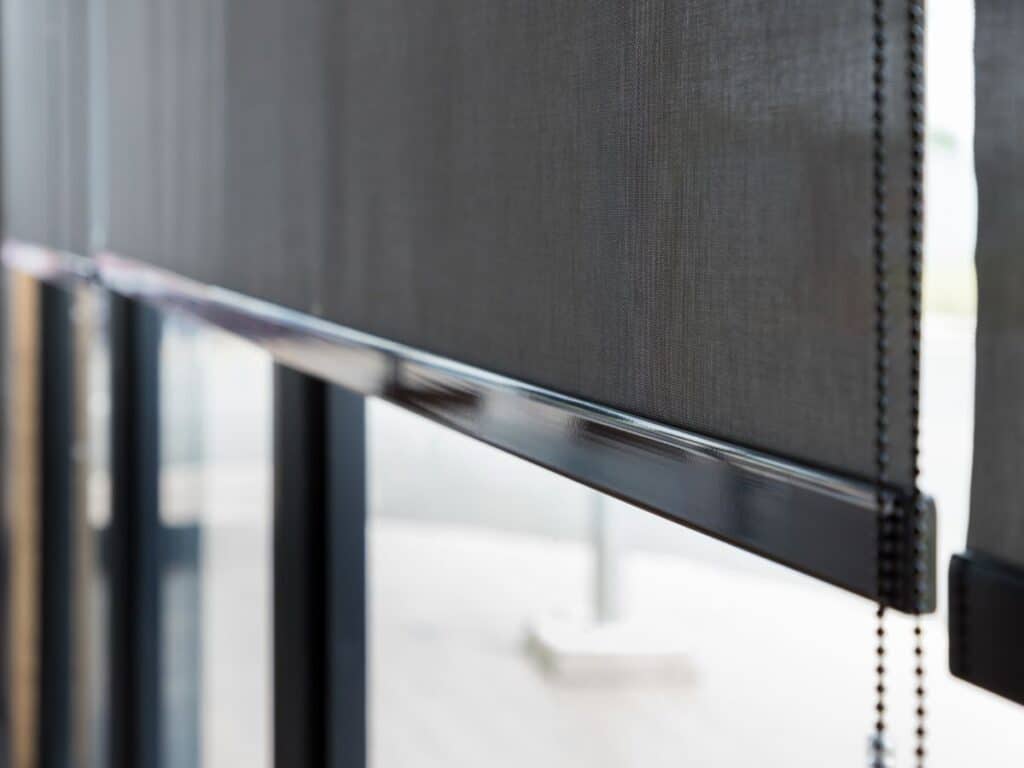
Why Professional Installation Matters
Installation is the final step that brings a custom treatment together.
Even carefully measured drapery can look incorrect if hardware is positioned improperly. Shades, blinds, shutters, and layered treatments also require proper placement to operate smoothly.
Professional installation becomes especially valuable with large treatments, heavy fabrics, tall windows, and layered configurations.
The objective is not simply to attach a covering to the window. Each component should be positioned so the treatment hangs, moves, and functions as intended.
Window Treatments Designed for Wisconsin Homes
Local homeowners experience changing sunlight, privacy needs, and seasonal conditions throughout the year. Their homes also vary considerably in age, architecture, window dimensions, and interior layouts.
Working with a local window treatment professional makes it possible to address the actual characteristics of the home rather than relying on generic recommendations.
Window Designs by Landy Brown serves Oconomowoc and surrounding Wisconsin communities, including Rubicon, helping homeowners select treatments based on their individual windows and preferences.
Available options include custom blinds, draperies, shades, shutters, bedding and pillows, and motorized coverings.
Create a More Personalized Window Treatment Plan
Choosing window treatments involves a combination of practical and visual decisions.
How much privacy does the room need? How should sunlight be managed? Does the homeowner prefer the softness of drapery, the tailored appearance of a Roman shade, or a layered combination? Does the window require motorization because of its size or location?
With custom fabric window treatments in Rubicon, those decisions can be made specifically for each room instead of compromising around a predetermined product.
Custom treatments can accommodate unusual dimensions, coordinate multiple windows, provide different levels of privacy, and create consistency throughout the home.
Schedule a Consultation With Window Designs by Landy Brown
If you are ready to explore custom fabric window treatments in Rubicon, Window Designs by Landy Brown can help you create a solution designed specifically for your windows, your functional needs, and your preferred style.
Whether you are considering custom draperies, Roman shades, layered window treatments, blinds, shutters, motorized coverings, or coordinated treatments throughout your home, professional guidance can help bring the different elements together.
Window Designs by Landy Brown proudly serves homeowners in Rubicon, Oconomowoc, and surrounding Wisconsin communities with personalized window treatment solutions.
To get started, call (262) 490-1541 or email Landy@windowsbylandy.com to discuss custom window treatments for your home.
No responses yet